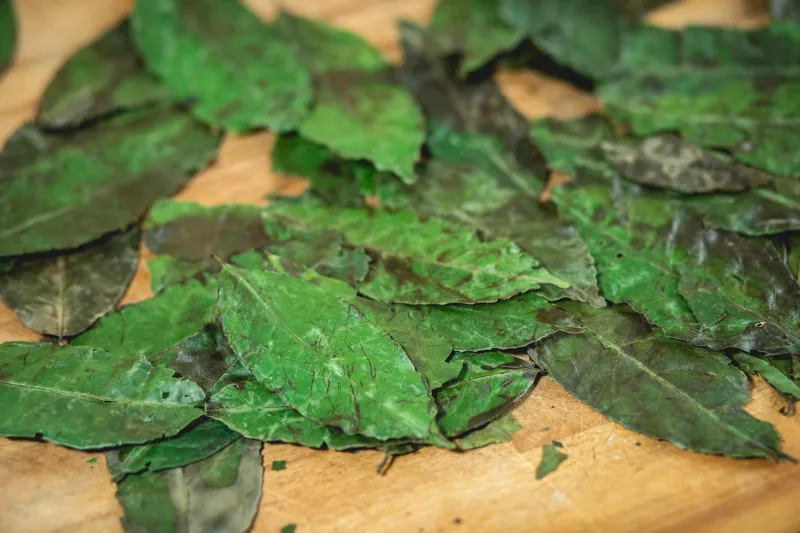
Deep in the hollows of Appalachian Kentucky, 89-year-old Ruby Mae still remembers her grandmother's ritual. Every morning before dawn, she'd strip bark from the wild cherry trees behind their cabin, steep it into a dark, bitter tea, and serve it to anyone in the community suffering from "the aches."
"Doctors in town called it nonsense," Ruby Mae recalls. "But we knew what worked."
What worked, it turns out, was something modern medicine is only beginning to understand.
The Remedy That Never Left the Mountains
For over 200 years, Appalachian folk healers passed down a specific preparation: wild cherry bark tea, harvested at precise times of year, combined with wintergreen leaves and sometimes a touch of willow bark. The recipe varied slightly between families, but the core remained consistent — and so did the results.
While mainstream medicine dismissed these practices as superstition, the mountain communities never stopped using them. Generation after generation of coal miners, loggers, and farmers relied on what they called "grandmother's medicine" for joint pain, swelling, and what we now recognize as chronic inflammation.
The tradition persisted not because of blind faith, but because it worked.
What Scientists Found When They Finally Looked
In 2019, researchers at East Tennessee State University decided to investigate these "folk remedies" more seriously. What they discovered surprised even the skeptics.
Wild cherry bark contains compounds called cyanogenic glycosides — natural chemicals that, when processed correctly, demonstrate significant anti-inflammatory properties. The wintergreen leaves added to traditional recipes? They're loaded with methyl salicylate, a compound closely related to aspirin.
But here's where it gets interesting: the traditional preparation methods, passed down through oral tradition, actually optimized these compounds in ways that pharmaceutical extraction couldn't replicate.
"These healers were essentially creating a synergistic blend of natural anti-inflammatories," explains Dr. Sarah Chen, who led the Tennessee study. "They didn't know the chemistry, but they perfected the process through centuries of trial and refinement."
The Keepers of Forgotten Knowledge
The real story isn't just about the remedy — it's about the people who preserved it.
Appalachian folk healers, mostly women, maintained detailed mental catalogs of which plants worked for what conditions, when to harvest them, and how to prepare them safely. This knowledge system operated parallel to mainstream medicine, serving communities that often had limited access to doctors or couldn't afford pharmaceutical treatments.
"My great-aunt could tell you exactly when to strip bark based on the moon phase and weather patterns," says James Whitaker, a third-generation herbalist from West Virginia. "She said the medicine was strongest in early spring, just before the sap started running heavy."
Modern analysis confirms this timing produces the highest concentration of active compounds.
Why It Disappeared From Medical Practice
By the 1950s, the rise of pharmaceutical companies and the push for "scientific" medicine gradually marginalized folk healing practices. Medical schools stopped teaching herbal medicine, and doctors began viewing traditional remedies as primitive or dangerous.
The irony is that many pharmaceutical anti-inflammatories were originally derived from the same plants Appalachian healers had been using all along. Aspirin comes from willow bark. Many modern pain relievers trace their origins to plant compounds.
But in the rush to synthesize and standardize these medicines, the traditional knowledge of how to use them in their natural forms was largely lost — except in isolated mountain communities that never fully bought into the pharmaceutical revolution.
What Modern Research Is Revealing
Recent studies are validating not just the effectiveness of these traditional remedies, but their safety profiles as well. Unlike synthetic anti-inflammatories, which can cause stomach ulcers and cardiovascular problems with long-term use, the traditional plant preparations appear to have fewer side effects when used correctly.
Dr. Chen's team found that wild cherry bark tea, prepared according to traditional methods, reduced inflammatory markers in laboratory tests by up to 40% — comparable to low-dose ibuprofen, but without the associated risks.
"The traditional preparation methods seem to buffer the active compounds in ways that make them gentler on the digestive system," she notes.
The Revival Nobody's Talking About
Quietly, a new generation of researchers is working to document and validate traditional Appalachian healing practices before they disappear entirely. Universities across the region have launched ethnobotany programs, racing to record the knowledge of aging folk healers.
Meanwhile, some forward-thinking medical practitioners are beginning to integrate these validated traditional remedies into their treatment protocols — not as replacements for modern medicine, but as complementary approaches for managing chronic inflammation.
What This Means Today
The Appalachian bark tea story reveals something important about how we approach health and healing. Sometimes the most effective solutions aren't the newest or most high-tech — they're the ones that have been quietly working for generations, preserved by communities that never stopped believing in their value.
As chronic inflammation emerges as a root cause of everything from arthritis to heart disease, maybe it's time we listened more carefully to the voices from the mountains who figured this out centuries ago.
Ruby Mae still brews her grandmother's tea every morning. "Doctors finally coming around to what we always knew," she says with a smile. "Took them long enough."