How Civil War Soldiers Slept in Two Shifts — And Why Your Brain Might Actually Prefer It
The Night Nobody Slept Straight Through
Somewhere around the mid-1800s, if you woke up at 2 a.m. and couldn't fall back asleep, you didn't panic. You didn't stare at the ceiling convinced something was wrong with you. You got up, maybe read by candlelight, chatted with a neighbor, or tended to something around the house. Then, an hour or two later, you went back to bed.
This wasn't insomnia. It was just Tuesday night.
Historian Roger Ekirch spent over two decades digging through old diaries, court records, and medical texts, and what he found turned a lot of assumptions about sleep upside down. Before industrialization reshaped daily life, most people in the Western world slept in two distinct phases — what researchers now call biphasic sleep. A "first sleep" lasting several hours, a quiet waking period in the middle of the night, and then a "second sleep" before dawn.
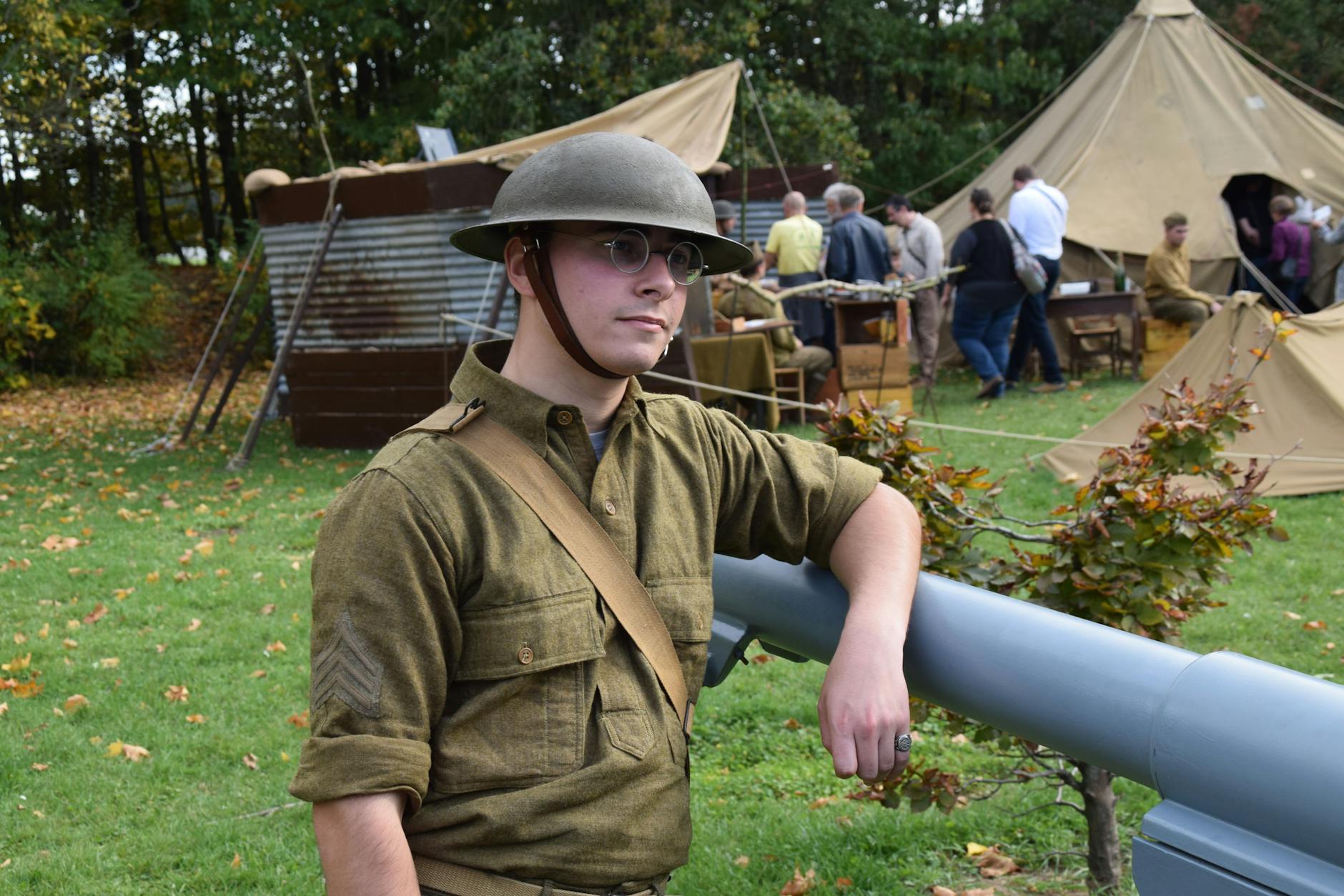
And Civil War soldiers, of all people, leaned into this pattern hard.
Sleeping in Shifts on the Battlefield
Think about what soldiers in the 1860s were dealing with: irregular camp schedules, rotating watch duties, noise, cold, and the constant psychological weight of war. A clean eight-hour block of sleep wasn't just rare — it was basically a fantasy.
What many soldiers did instead, whether by design or necessity, was adapt to a split-rest rhythm. First-watch duty would end in the early hours of the morning. Soldiers who'd already grabbed a few hours of sleep would rise, handle tasks, eat something, write letters home, then return to sleep before reveille. Frontier settlers and rural farmers operated similarly, waking between sleeps to check on livestock, stoke fires, or simply sit with their thoughts in the quiet dark.
The striking thing? Accounts from the era don't describe this as exhausting. Many described the middle-of-the-night waking period as unusually calm and mentally clear — a kind of soft-focus alertness that felt different from daytime thinking.
There may be a biological reason for that.
What's Actually Happening in Your Brain at 2 A.M.
Researchers studying biphasic sleep patterns have noted something interesting: the waking period between the two sleep phases often coincides with elevated levels of prolactin, a hormone associated with a relaxed, almost meditative mental state. It's the same hormone that surges during REM sleep and after certain calming activities.
In other words, that middle-of-the-night window isn't just dead time between sleep cycles. It may be a neurologically distinct state — one that humans historically used for reflection, creativity, and quiet intimacy.
Psychiatrist Thomas Wehr ran a landmark experiment in the 1990s where he removed artificial light from participants' evenings for several weeks. Within a month, nearly all of them shifted naturally into a biphasic pattern — sleeping in two phases with a calm waking period in between. Nobody told them to do this. Their bodies just... went there.
Wehr's conclusion was striking: the consolidated eight-hour sleep block that most Americans treat as biological gospel might actually be a product of the electric light bulb, not human evolution.
Why We Stopped Sleeping This Way
The Industrial Revolution didn't just change where people worked — it changed when they slept. Factory shifts demanded workers show up alert and on time, which meant a single long sleep block became the socially enforced norm. Artificial lighting pushed bedtimes later, compressing the night. By the early 20th century, waking in the middle of the night had gone from normal behavior to a medical complaint.
Sleep hygiene guides started treating nighttime wakefulness as a symptom. Pharmaceutical companies developed products to fix it. The cultural story around sleep shifted from "two phases is natural" to "eight unbroken hours or you're broken."
Most Americans never got the memo that the original story was different.
Could You Actually Try This?
Here's where it gets practical. You're probably not going to restructure your entire sleep schedule around a 16th-century farming pattern — and honestly, you don't need to. But there are a few low-friction ways to experiment with the underlying principle.
Don't fight the 2 a.m. wake-up. If you regularly wake in the early hours and can't immediately fall back asleep, try getting up for 20–30 minutes instead of lying there anxious. Keep the lights dim, avoid screens, do something quiet. Many people find they drift back to sleep more easily after this than if they'd spent that time stressing in bed.
Consider a structured nap. Biphasic sleep doesn't have to happen at night. Many cultures — Spain's siesta being the obvious example — split rest between a nighttime sleep and a short afternoon nap. Even a 20-minute rest in the early afternoon can replicate some of the cognitive benefits of a two-phase cycle.
Reduce artificial light after sunset. Wehr's research pointed directly at electric light as the main disruptor of natural sleep architecture. Dimming your environment in the evening hours can help your body rediscover its own rhythm without forcing anything.
The Bigger Takeaway
The Civil War soldiers who slept in two shifts weren't doing something weird or desperate. They were, arguably, sleeping the way humans had slept for most of recorded history. The "right" way to sleep isn't necessarily the modern way — and for a lot of people lying awake at 3 a.m. convinced their bodies are malfunctioning, that reframe alone might be worth something.
Sometimes the most useful health insight is just learning that what feels broken was actually the original design.