There's a Japanese Word for the Pause That Prevents Burnout — Most Americans Have Never Heard of It
The Concept That Doesn't Translate Cleanly
There's a reason ma (間) hasn't gone viral in American wellness culture the way that hygge or ikigai did. It's harder to sell. You can't really put it on a throw pillow.
Ma is a Japanese concept that describes intentional negative space — the meaningful pause, the deliberate gap, the empty interval that gives surrounding things their shape and significance. It shows up in Japanese architecture as the purposeful empty room. In music, it's the silence between notes that makes the melody make sense. In conversation, it's the unhurried pause before responding that signals genuine consideration rather than impatience.
And in daily life, it's something that a growing number of researchers and cultural observers believe quietly explains why certain Japanese communities experience dramatically lower rates of burnout, cardiovascular disease, and anxiety-related illness compared to their American counterparts.
This isn't a productivity hack. It's almost the opposite.
What Hustle Culture Gets Backwards
American work culture has a complicated relationship with emptiness. An unscheduled hour is a problem to be solved. A quiet moment at your desk is wasted potential. The default assumption — baked into everything from open-plan offices to LinkedIn culture — is that more output, more connectivity, and more stimulation are inherently better than less.
The data on where this leads isn't encouraging. The American Institute of Stress estimates that 83% of US workers experience work-related stress, and burnout rates have climbed consistently over the past decade. Chronic overstimulation is increasingly linked to degraded decision-making, shortened attention spans, and a kind of low-grade exhaustion that people normalize because everyone around them seems to have it too.
Ma operates from a fundamentally different premise: that the space between activities is not wasted time. It is, in fact, what makes the activities themselves coherent and sustainable.
In communities in Japan's Okinawa prefecture — famously one of the world's Blue Zones, where people routinely live past 100 in good health — daily life is structured around natural intervals. Meals are eaten slowly and without multitasking. Transitions between activities aren't filled with phone-checking or task-switching. There's a cultural tolerance for pause that's almost foreign to the American experience.
Researchers studying Okinawan longevity don't point to ma by name as the cause of their health outcomes. But the behavioral patterns that ma produces — reduced chronic stress, better sleep, lower cortisol, stronger social connection — map almost perfectly onto what the longevity data identifies as protective factors.
What Ma Is Not
Before getting into practical application, it's worth clearing up what ma isn't — because the American wellness industry has a talent for taking subtle ideas and turning them into something they're not.
Ma is not a meditation practice. You don't set a timer, follow a guided audio, or track your sessions in an app. It's not about achieving a specific mental state.
It's also not the same as "doing nothing." Plenty of people stare at their phones for twenty minutes between meetings and call it downtime. That's not ma. The concept involves intentionality — a conscious acknowledgment that the space itself has value, that you're not just waiting for the next thing to start.
And it's definitely not a weekend retreat or a quarterly digital detox. Ma is woven into ordinary moments. It's structural, not supplemental.
Three Specific Ways to Apply It (That Don't Require Overhauling Your Life)
1. Build a transition gap between your last work task and your first personal one.
Most Americans move from work to home life with zero decompression — laptop closed, phone still buzzing, brain still running the same stress loop in a different physical location. Try inserting a deliberate 10-minute gap. Not a walk with a podcast. Not a call you've been putting off. Literally a gap — sit in your car before going inside, or sit on the porch without your phone. Let the day's mental residue settle before you shift contexts. It sounds trivial. The effect over weeks is not.
2. Stop filling conversational silences.
This is one of the most culturally specific applications of ma for an American audience, because American conversational norms treat silence as discomfort to be immediately resolved. In meetings, in conversations with your kids, in arguments with your partner — try letting a pause exist for three or four seconds before you respond. You'll notice you say different things. Often better things. The silence isn't awkward; you've just been trained to believe it is.
3. Leave one visual space in your home deliberately empty.
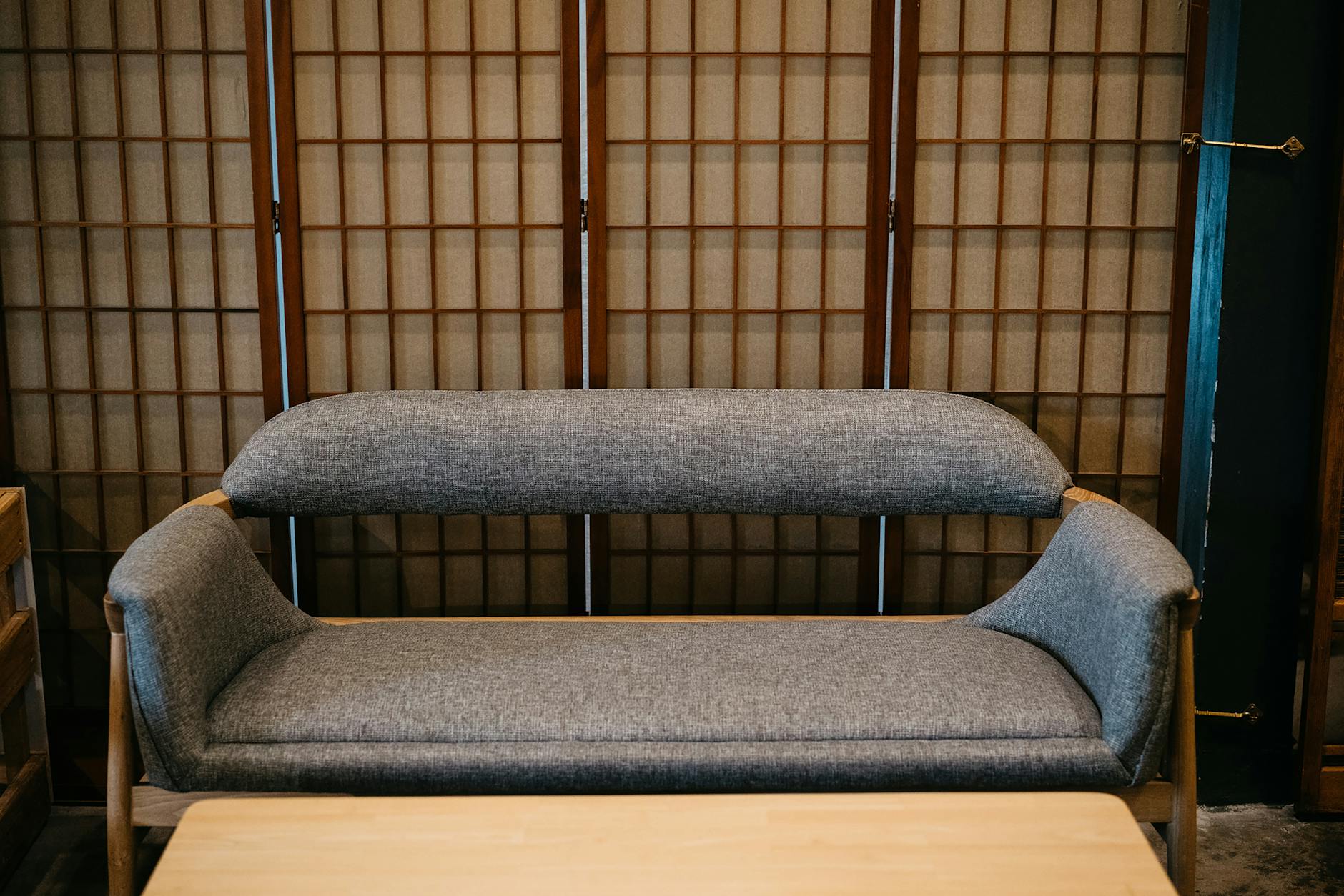
Japanese interior design is notorious for its use of negative space — a single object on a shelf, a bare wall that draws the eye. This isn't minimalism for aesthetics. It's a physical embodiment of ma. In your own home, try identifying one surface or corner that you actively resist filling. No decor, no clutter, no "I'll put something there eventually." The emptiness itself is the point. You may notice that an uncluttered visual environment subtly reduces the background noise of your mental state.
The Uncomfortable Implication
Here's what makes ma genuinely countercultural in an American context: it requires believing that you don't have to earn rest through exhaustion first. That the pause isn't a reward for productivity — it's a structural component of a life that stays functional over decades rather than burning bright and then flaming out.
That's a harder sell than a morning routine or a supplement stack. There's no before-and-after photo for ma. The benefit is largely the absence of something — the absence of the chronic depletion that accumulates when every moment is filled.
But for people who've tried every productivity system and still feel like they're running on fumes, the idea that the fix might be less rather than more? That might be the most surprising discovery of all.