Victorian Doctors Sent Patients to the Beach to Heal. Turns Out, That Wasn't Crazy.
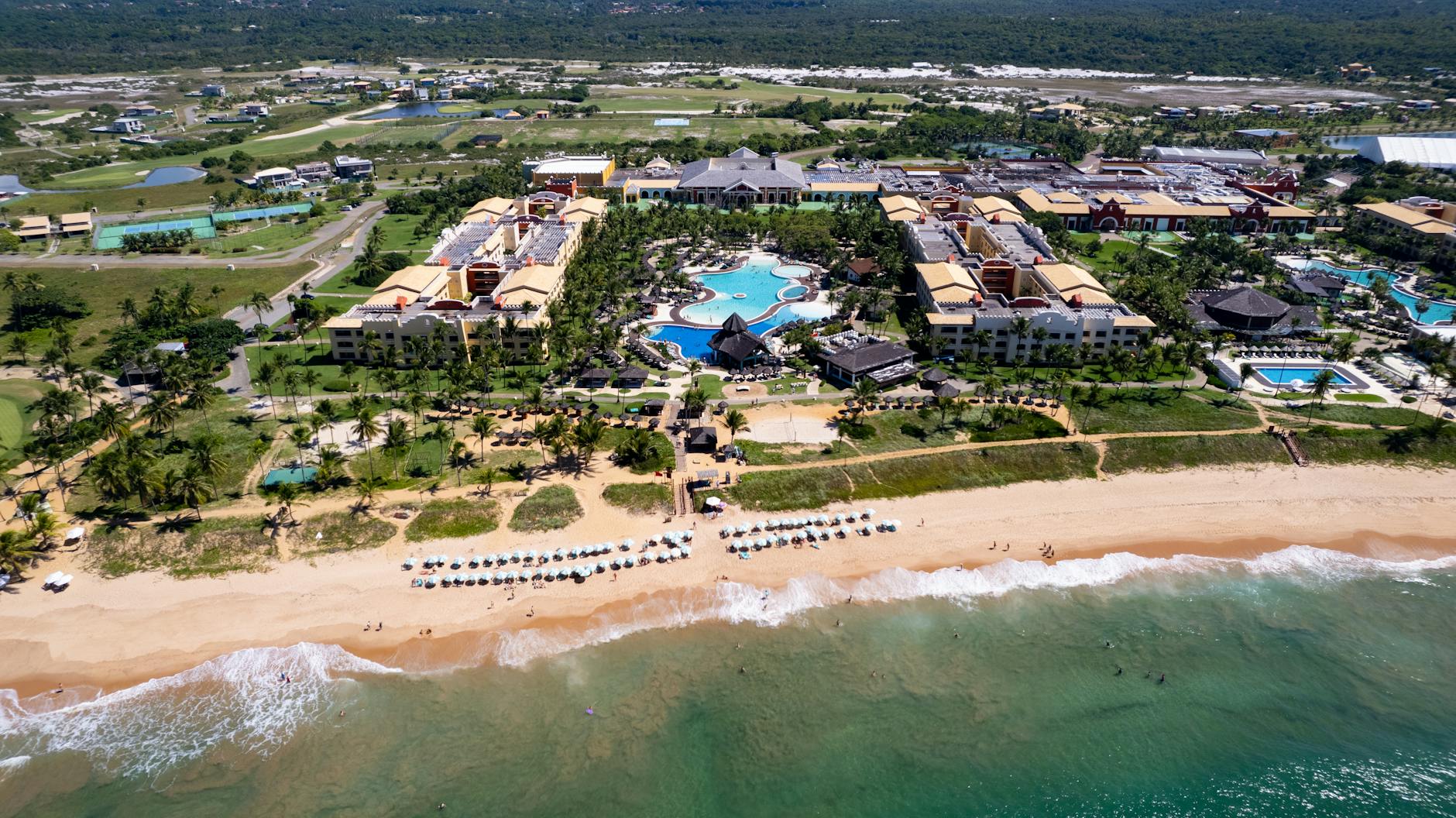
The Doctor's Orders: Go to the Beach
Picture this: it's 1872, and your physician has just handed you a prescription. Not for a tincture or a pill — for the ocean. Specifically, for the air near it.
This was not an unusual scene in 19th-century America and Britain. Coastal resorts in places like Newport, Rhode Island, Cape May, New Jersey, and the Carolina shores were full of middle-class patients who'd been sent there by their doctors to breathe the sea air and recover from everything from tuberculosis to "nervous exhaustion." Physicians of the era wrote extensively about the restorative properties of coastal environments, the mineral-rich breezes, the particular quality of light, the psychological effect of open water.
Then modern medicine arrived, germ theory rewrote the rulebook, and the sea-air cure got quietly shelved alongside bloodletting and tonic water as a relic of pre-scientific thinking.
Except — and this is the part that's worth paying attention to — some of it wasn't wrong.
What Victorian Doctors Were Actually Noticing
Here's the thing about a lot of dismissed folk medicine: it was often built on real observation, just without the vocabulary to explain the mechanism. Victorian physicians couldn't run a controlled trial on atmospheric ion concentrations. But they could observe that patients who spent time near the ocean often seemed to feel better, sleep more soundly, and recover from respiratory illness more reliably than those who stayed in smoky industrial cities.
They weren't imagining it. They just didn't know why it was happening.
We're starting to fill in some of those blanks now.
The Science of What's Actually in Ocean Air
Let's start with negative ions — because this is where the research gets genuinely interesting and also where a lot of wellness marketing has muddied the water.
Negative ions are molecules that carry an extra electron. They're found in high concentrations near moving water — waterfalls, rivers, and especially ocean surf. When waves crash, they produce a fine aerosol of seawater that releases these ions into the air. Several studies have explored their potential effects on human physiology, with some research suggesting that high negative-ion environments may influence serotonin metabolism and could have modest effects on mood and alertness in certain individuals.
The evidence is not ironclad — researchers are careful to note that study quality varies and effects appear to differ between people. But the signal is there, and it's consistent enough that scientists haven't dismissed it.
Then there's the mineral angle. Coastal air carries aerosolized particles of seawater, including iodine, magnesium, and other trace minerals. Iodine in particular has a well-documented relationship with thyroid function and immune response. In the pre-iodized-salt era of the 1800s, populations living inland were often significantly iodine-deficient. Coastal air and seafood weren't just pleasant — they were quietly addressing a nutritional gap that nobody had named yet.
For patients with respiratory conditions, there's also emerging research on the potential benefits of salt air specifically. Halotherapy — breathing salt-infused air — has a long history in Eastern European medicine and is now being studied in the context of conditions like asthma and chronic bronchitis, with some trials showing modest improvements in symptoms.
Blue Space: The Newer Science with Old Roots
Beyond the chemistry, there's a growing body of research around what environmental psychologists call blue space — the psychological and physiological effects of being near water.
A 2019 study published in Scientific Reports surveyed nearly 26,000 people and found that spending time near coastal or aquatic environments was associated with greater wellbeing and lower rates of mental health issues, even after controlling for income, physical activity, and other variables. Separate research from the European Centre for Environment and Human Health has linked blue space exposure to reduced stress markers, lower blood pressure, and improved mood.
This isn't magic, and researchers aren't claiming it is. The mechanisms being studied include reduced physiological stress response, the attention-restoring effects of natural environments, and the combination of sensory inputs — sound, light, temperature — that coastal settings provide in a way that's distinct from even other natural environments like forests.
Victorian doctors didn't have the language for any of this. But when they watched a patient with frayed nerves and labored breathing improve after a month in Newport, they were observing something real.
What This Means for People Who Can't Move to the Coast
Obviously, not everyone can relocate to a beach town every time they're feeling run-down. But the underlying research points to a few accessible ideas.
Proximity to water matters more than you might think. Even urban lakes, rivers, and fountains appear to produce some of the psychological effects associated with blue space. If you're in a city, time near a body of water — even a modest one — is worth prioritizing differently than you might currently be.
The sensory package is part of the effect. The research suggests it's not just the chemistry of coastal air but the combination of sound, open horizon, and natural light that produces measurable results. Replicating pieces of that environment — even through something as simple as ambient ocean sound during a rest period — has shown some effect in smaller studies.
The Victorians were onto a real pattern, even with a flawed explanation. This is a theme that shows up repeatedly in medical history: dismissed folk practices that turn out to have a legitimate mechanism once the science catches up. The sea-air cure was oversold, poorly understood, and occasionally used as an excuse for wealthy people to take expensive vacations. But underneath the theater, there was something worth keeping.
The Rehabilitation of an Old Prescription
It's a strange kind of historical justice. For decades, the image of a Victorian doctor solemnly recommending a seaside holiday was shorthand for medical ignorance. Now, environmental health researchers are essentially arriving at similar conclusions through clinical trials and epidemiological data.
The ocean doesn't cure everything. It probably didn't cure everything in 1872 either. But the idea that coastal environments have measurable effects on human health — respiratory, psychological, physiological — is no longer fringe. It's just science that took a long detour through dismissal before finding its way back.