The 4-7-8 Method That Saved Lives on WWI Battlefields — Before Big Pharma Made Everyone Forget
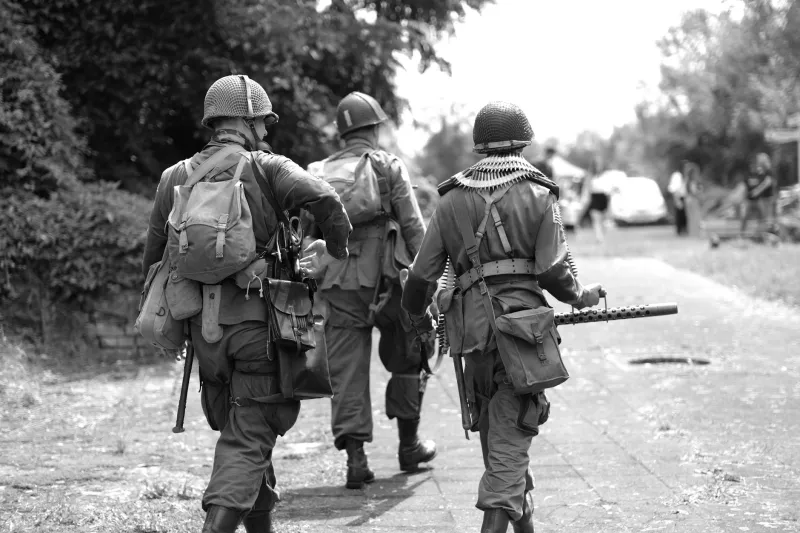
In the muddy trenches of World War I, when morphine ran short and panic threatened to kill as many soldiers as bullets, field medics stumbled onto something remarkable. A breathing technique so effective at calming traumatic shock that it could bring a hyperventilating, shell-shocked soldier back to consciousness in under three minutes.
Then the pharmaceutical industry exploded after the war, and this discovery got buried under an avalanche of chemical solutions.
The Accidental Discovery That Changed Everything
Dr. Edmund Jacobson wasn't looking for a miracle cure when he started documenting breathing patterns in 1918. As a young military physician stationed in France, he was simply trying to keep soldiers alive long enough to get proper medical attention.
What he noticed changed his understanding of human physiology forever.
Soldiers experiencing traumatic shock — what we now call acute stress reactions — showed identical breathing disruptions. Their respiratory rate would spike to 30-40 breaths per minute (normal is 12-16), creating a cascade of physiological chaos that often proved fatal.
But Jacobson observed something else: the few soldiers who naturally regulated their breathing during crisis recovered faster and showed fewer long-term psychological symptoms.
The Pattern That Stopped Panic in Its Tracks
Through trial and error, Jacobson developed what military records called "controlled respiratory intervention." The technique was deceptively simple:
- Inhale through the nose for 4 counts
- Hold the breath for 7 counts
- Exhale through the mouth for 8 counts
- Repeat 4-6 cycles
Medics reported that soldiers using this pattern showed measurable improvement within 2-3 minutes. Heart rates dropped. Muscle tension decreased. Mental clarity returned.
By 1919, this breathing method was standard protocol in several American field hospitals. Military medical journals documented success rates that would make modern anxiety medications jealous.
Why It Actually Works (The Science They Didn't Have Yet)
Jacobson couldn't explain why his technique worked — neuroscience was still in its infancy. But modern research has revealed the elegant biological mechanism he accidentally discovered.
The extended exhale (8 counts versus 4 for inhale) activates the parasympathetic nervous system — your body's "rest and digest" mode. This directly counteracts the sympathetic "fight or flight" response that drives anxiety and panic.
The breath-holding phase forces a brief increase in carbon dioxide, which triggers the vagus nerve. This massive nerve network runs from your brain to your abdomen and acts like a biological reset button for your stress response.
Dr. Andrew Weil, who helped popularize this technique in the 1990s, calls it "a natural tranquilizer for the nervous system." Unlike pharmaceutical sedatives, it gets more powerful with practice rather than requiring higher doses.
The Pharmaceutical Takeover That Changed Medicine
So why did such an effective technique disappear from mainstream medicine?
The answer lies in the post-war boom of the 1920s and 1950s. As pharmaceutical companies grew into billion-dollar enterprises, the medical establishment shifted toward chemical solutions. Pills were profitable. Breathing techniques weren't.
By the 1960s, medical schools barely mentioned breathing-based interventions. The generation of doctors who remembered battlefield medicine retired, taking their knowledge with them.
Anxiety became a pharmaceutical problem with pharmaceutical solutions — benzodiazepines, SSRIs, and a parade of medications that treat symptoms rather than teaching the body to regulate itself.
The Quiet Revival
While mainstream medicine moved toward chemical interventions, a small community of practitioners kept Jacobson's discovery alive.
Integrative medicine clinics began incorporating breathing techniques in the 1980s. Trauma therapists rediscovered their effectiveness for PTSD. Even some progressive hospitals started training nurses in "respiratory regulation therapy."
Today, research institutions like Stanford and Harvard are publishing studies that validate what military medics figured out a century ago: controlled breathing can be more effective than medication for acute anxiety, with zero side effects.
How to Use It Today
The technique Jacobson developed remains unchanged:
- Find a comfortable position (sitting or lying down)
- Place your tongue against the ridge behind your upper teeth
- Exhale completely through your mouth
- Close your mouth, inhale through your nose for 4 counts
- Hold your breath for 7 counts
- Exhale through your mouth for 8 counts
- Repeat 3-4 times initially, building up to 6-8 cycles
Start with shorter counts if the full pattern feels uncomfortable. The ratio (4:7:8) matters more than the absolute timing.
What the Soldiers Knew
Perhaps the most remarkable aspect of this story isn't the technique itself — it's how something so effective could be forgotten by an entire medical system.
Those WWI medics understood something we're just rediscovering: the human body has built-in mechanisms for handling crisis. Sometimes the most powerful medicine isn't what you add to the system — it's learning to work with what's already there.
In an age where anxiety disorders affect 40 million American adults, maybe it's time to remember what those battlefield medics figured out when they had nothing but their wits and a desperate need to keep people alive.