Sanatorium Doctors Prescribed Silence Like Medicine a Century Ago — Brain Science Just Explained Why It Worked
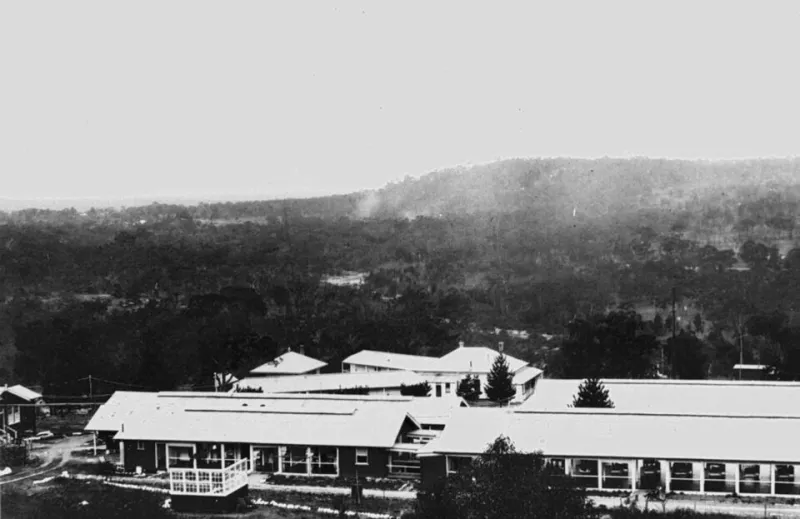
Photo: Unknown, Public domain, via Wikimedia Commons
A Prescription With No Explanation
In the early decades of the 20th century, before antibiotics existed and tuberculosis was killing roughly one in seven Americans, a network of sanatoriums spread across the hillsides of New England, the Adirondacks, and the mountain towns of Colorado. These weren't hospitals in the modern sense. They were carefully managed environments — places where the treatment consisted almost entirely of controlled air, controlled rest, controlled food, and controlled sound.
 Photo: New England, via c8.alamy.com
The silence hours were non-negotiable. Typically running from mid-morning to early afternoon, and again in the late evening, they prohibited conversation above a whisper, banned musical instruments, and in some facilities restricted even the sound of footsteps in corridors. Patients who violated them were reprimanded. Staff who allowed noise to intrude were disciplined.
The physicians who designed these protocols couldn't explain, in mechanistic terms, why silence mattered. They knew it did because they'd watched patients deteriorate in noisy wards and stabilize in quiet ones. That empirical observation was enough. They built entire institutional architectures around it.
What they couldn't have known was that they were, accidentally, running a clinical trial on one of the most important concepts in modern neuroscience.
What the Brain Does When Nothing Is Happening
For most of the 20th century, neuroscientists assumed that the brain's resting state was essentially a standby mode — a quiet baseline between meaningful activities. That assumption turned out to be completely wrong.
In the late 1990s and early 2000s, researchers studying brain imaging data noticed something unexpected: when subjects were given no task to perform and allowed to let their minds wander, a specific network of brain regions lit up with intense, coordinated activity. This network — now called the default mode network, or DMN — was not resting. It was working hard.
The DMN is now understood to be involved in memory consolidation, emotional processing, self-referential thought, and what researchers sometimes call the brain's maintenance functions — the background processing that keeps psychological coherence intact. It is, in a meaningful sense, how the brain repairs itself.
And here's the critical detail: the DMN cannot fully activate while the brain is processing incoming sensory information. Noise, in particular, keeps the auditory cortex engaged in a way that competes directly with default mode activity. A brain in a noisy environment is a brain that cannot complete its own maintenance cycle.
The sanatorium doctors had no vocabulary for any of this. But they had noticed, ward by ward, that patients in quiet environments healed differently than patients in noisy ones. They were observing DMN suppression and restoration without knowing those words existed.
The Cortisol Variable
There's a second mechanism at work that the sanatorium physicians were also inadvertently managing.
Cortisol — the body's primary stress hormone — is acutely sensitive to auditory input. Unpredictable or loud sounds trigger cortisol release even when the conscious mind doesn't register them as threatening. This is an ancient protective mechanism: sudden noise meant potential danger, and the body prepared accordingly.
In a patient already weakened by tuberculosis, chronic low-level cortisol elevation was genuinely dangerous. Cortisol suppresses immune function, impairs tissue repair, disrupts sleep architecture, and interferes with the nutritional absorption that TB patients desperately needed. A noisy ward wasn't just uncomfortable. It was, in a specific physiological sense, making patients sicker.
Modern research on environmental noise and health outcomes has confirmed this in populations far beyond TB wards. A landmark study by the World Health Organization estimated that chronic environmental noise in Western Europe alone was responsible for over a million healthy life years lost annually — through cardiovascular effects, sleep disruption, and chronic stress activation. The mechanisms are now well understood. The sanatorium doctors were protecting their patients from exactly these effects, purely by observation.
The Duration That Keeps Appearing
Here's where the convergence becomes genuinely strange.
The silence hours enforced in most New England sanatoriums ran, in their primary daytime block, for approximately 90 to 120 minutes. This wasn't arbitrary — physicians had arrived at it empirically, noting that shorter quiet periods seemed to produce less consistent benefit, while much longer enforced silence was difficult to maintain and sometimes produced agitation in patients.
Ninety to 120 minutes also happens to be the approximate duration of a single ultradian cycle — the basic rest-activity rhythm that governs brain state oscillations throughout the day. Research on DMN recovery and cortisol normalization following noise exposure has found that meaningful nervous system reset requires, at minimum, roughly 90 minutes of reduced sensory load.
The sanatorium physicians had landed on this figure through trial and error, watching patients, adjusting protocols, and keeping records. They hit the right number without the right theory.
The Silence We've Designed Out of Modern Life
It is genuinely difficult to find 90 uninterrupted minutes of acoustic quiet in most American environments today. Open-plan offices average noise levels that OSHA classifies as potentially stressful. Residential neighborhoods near highways maintain constant background sound levels that exceed what the sanatorium physicians would have permitted during a minor infraction. Smartphones ensure that even ostensibly quiet moments are interrupted with notification sounds at irregular intervals — which, from the cortisol perspective, is the most damaging pattern possible.
Some researchers studying cognitive restoration have started using the term acoustic hygiene — a deliberate, scheduled management of sound exposure, analogous to sleep hygiene — to describe what they believe is a missing element in most modern wellness frameworks.
The concept hasn't gone mainstream yet. It doesn't have a wearable. It doesn't generate data you can share. It's just quiet, which is apparently much harder to sell than noise.
What the Doctors Knew Without Knowing It
The sanatorium physicians of the 1920s were working with limited tools and a disease they couldn't cure. What they built instead was an environment — carefully managed, empirically refined — that gave the body the best possible conditions to do what it needed to do.
Their silence hours weren't mysticism or superstition. They were a clinical intervention based on careful observation of outcomes, arrived at without the theoretical framework that would have explained them.
A century later, neuroscientists with functional MRI machines and cortisol assays have essentially reconstructed the same prescription from the other direction — starting with the mechanism and working toward the dose.
The dose they arrived at looks a lot like what those doctors already knew.