Frontier Surgeons Packed This Forest Plant Into Wounds. Trauma Surgeons Just Quietly Brought It Back.
The Surgeon With No Hospital and No Options
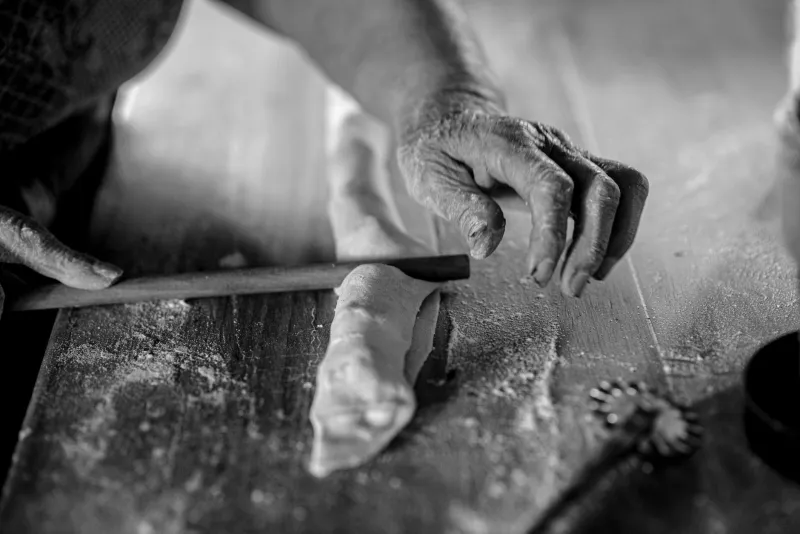
Picture a field surgeon in 1840s Appalachia. No sterile operating room. No blood bank. No synthetic clotting agents. Just a patient bleeding out on a wooden table and whatever the surrounding forest could offer.
These weren't quacks. Many frontier surgeons were remarkably skilled practitioners who adapted to their environment out of sheer necessity. And one adaptation kept showing up in their journals, their letters, and their oral traditions: a woodland herb packed directly into hemorrhaging wounds that, by most accounts, worked with unsettling reliability.
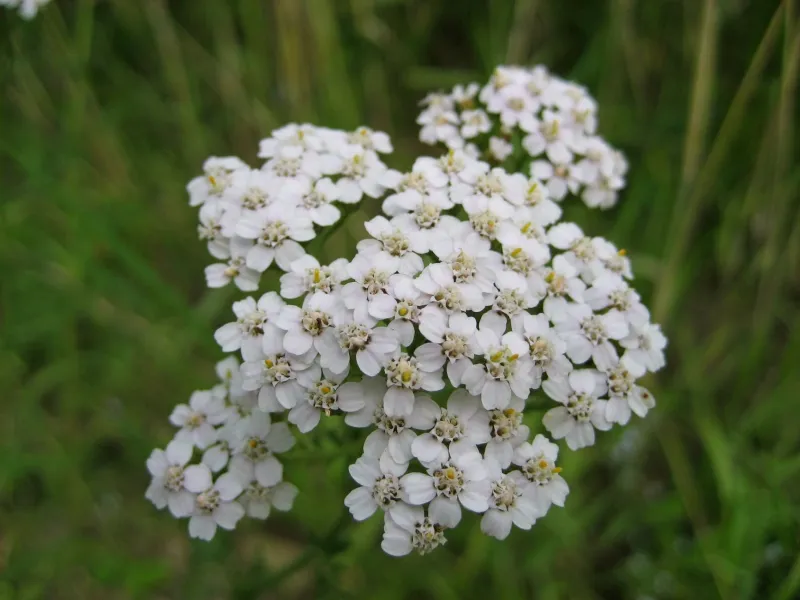
The plant was yarrow — Achillea millefolium — a feathery, white-flowered perennial that grows wild across most of North America, including dense stands throughout the Appalachian range. Its very Latin name is a nod to the Greek myth that Achilles used it to treat his soldiers' wounds. But in 19th-century America, that classical backstory was mostly forgotten. What Appalachian healers and backcountry surgeons knew was simpler and more immediate: pack it into a wound, and the bleeding slows.
For decades, mainstream medicine filed this away under "colorful folklore" and moved on.
What the Journals Actually Said
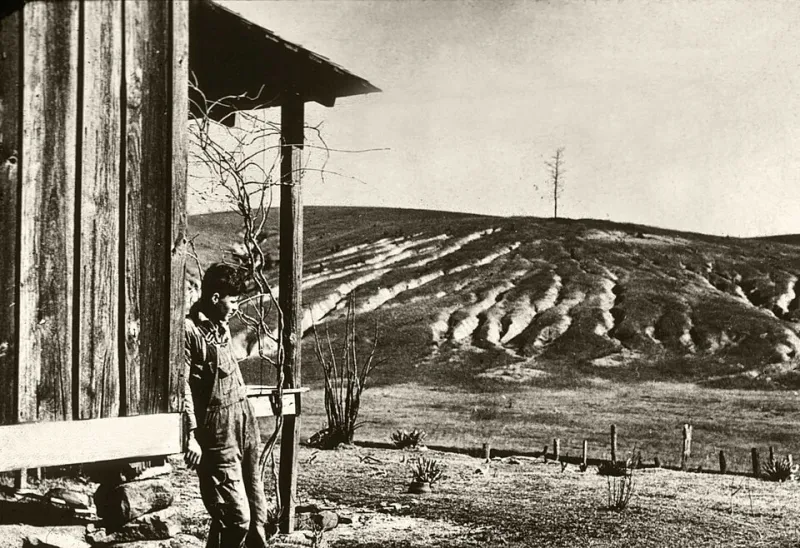
Here's what's easy to miss: these weren't casual observations. Frontier surgeons kept detailed records. Letters exchanged between practitioners in Kentucky, Tennessee, and western Virginia describe yarrow poultices applied to gunshot wounds, deep lacerations, and post-amputation sites with consistent results. One mid-1800s account from a traveling physician in the Blue Ridge describes using a yarrow compress to control bleeding from a farm accident wound when conventional methods had failed — and noting that clotting occurred "with remarkable speed."
 Photo: Blue Ridge, via icolorpalette.com
The active compounds responsible weren't identified until much later. Yarrow contains achilletin and achilleine — alkaloids that promote platelet aggregation and vasoconstriction. It also carries tannins that act as natural astringents, essentially tightening the tissue around a wound. When you understand the biochemistry, the old surgeons' results stop looking like luck.
But understanding the biochemistry required someone to go looking for it. And for most of the 20th century, nobody in mainstream medicine bothered.
The Military Researchers Who Changed Everything
The rediscovery didn't come from a university botany lab or a natural medicine journal. It came from the U.S. military.
In the early 2000s, with combat operations in Afghanistan and Iraq producing a new generation of trauma medicine challenges, military researchers began an aggressive search for better hemostatic agents — materials that could stop catastrophic bleeding faster than traditional gauze in field conditions. The research dragnet was wide, and it pulled in historical wound-treatment records, including documentation of botanical agents used in pre-industrial American medicine.
Yarrow kept appearing. Researchers at institutions connected to military trauma programs began isolating and testing its active compounds. What they found confirmed what Appalachian surgeons had empirically observed: yarrow-derived compounds genuinely accelerate clotting, reduce blood loss, and show low toxicity profiles compatible with wound care.
This work fed into a broader explosion of interest in plant-based hemostatic agents. While yarrow itself isn't typically packaged as a standalone product in modern trauma kits, its mechanisms directly informed the development and validation of several hemostatic dressings now standard in both military and civilian emergency medicine. The science those frontier surgeons stumbled into — through observation, necessity, and accumulated generations of knowledge — turned out to be real.
Hidden in Plain Sight on Every Hiking Trail
There's something almost comic about the geography here. Yarrow is not rare. It grows in lawns, along roadsides, in meadows, and along virtually every hiking trail in the eastern United States. It's the plant most people walk past without a second glance — a modest white cluster of tiny flowers on feathery green stems, easy to overlook, impossible to miss once you know what you're looking at.
Appalachian communities knew it by a string of folk names: woundwort, soldier's woundwort, nosebleed plant, staunchweed. Each name is essentially a medical instruction. "Staunchweed" means exactly what it sounds like. These weren't decorative nicknames — they were practical labels assigned by people who used the plant regularly and needed to communicate its function quickly.
The knowledge was so embedded in Appalachian culture that it survived well into the early 20th century in rural areas where access to physicians remained limited. It was only as modern medicine became genuinely accessible to rural communities — a process that accelerated sharply after World War II — that the botanical knowledge began to fade from everyday practice.
What Modern Emergency Medicine Actually Took From This
Today, elite trauma centers and military medics carry hemostatic gauze products — QuikClot and Combat Gauze being the most widely known — that work on principles directly related to what yarrow demonstrated empirically for centuries. The specific compounds differ, but the underlying mechanism (accelerating the body's own clotting cascade at the wound site) is the same insight those backcountry surgeons were working with using forest plants.
Some integrative medicine researchers have gone further, advocating for standardized yarrow preparations as a legitimate adjunct in wilderness medicine kits. The Wilderness Medical Society has noted the plant's historical use in their literature, and a handful of wilderness first-aid programs now include it in their botanical medicine modules.
The frontier surgeons didn't have peer-reviewed studies. They had patients who needed to stop bleeding and a forest full of options they'd learned to read carefully. They found something real, documented it as best they could, and passed it forward.
It just took medicine about 150 years to catch up and write the paper.
The Bigger Lesson
Yarrow's quiet rehabilitation in trauma medicine is a useful reminder that "folk remedy" and "scientifically valid" are not opposites. They're often the same observation, separated by time and the tools needed to explain the mechanism.
Next time you're hiking a trail in the Smoky Mountains or the Blue Ridge and you spot that familiar cluster of white flowers along the path, you're looking at something that kept people alive in conditions that would terrify most modern physicians. It deserved more credit than it got. It's finally starting to receive some.