Cash-Strapped 1930s Teachers Built a Morning Classroom Ritual That Accidentally Cracked the Stress Code
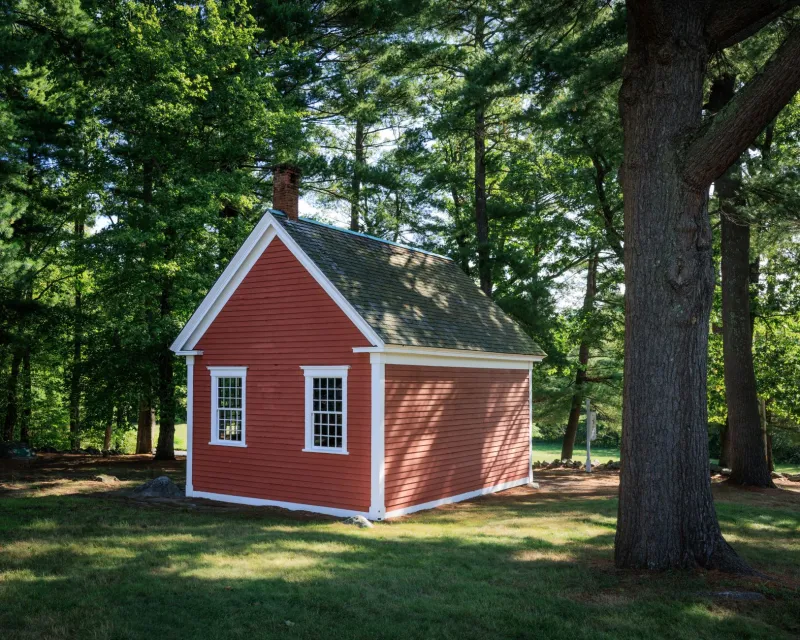
A One-Room Schoolhouse With No Budget and a Big Problem
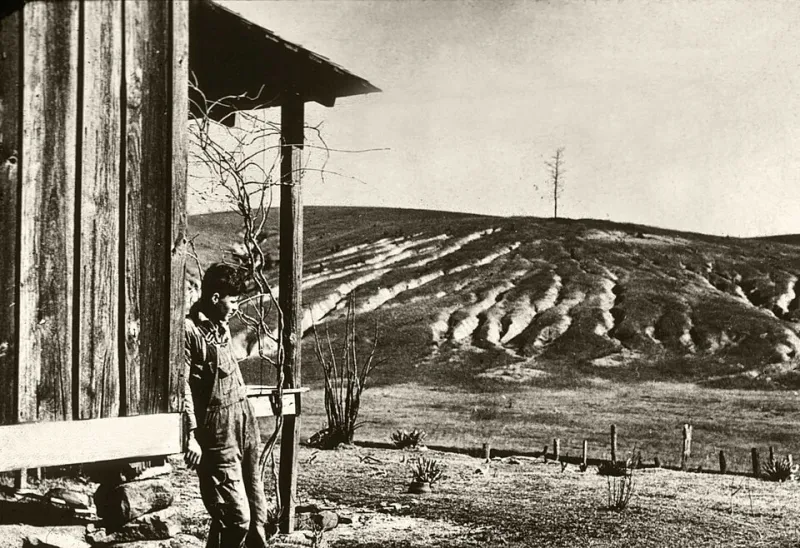
By 1932, rural school districts across the American South and Midwest were operating on financial fumes. Tax revenues had collapsed. State education budgets were gutted. Teachers in one-room schoolhouses from rural Georgia to the Kansas plains were sometimes going months without pay, accepting food from families instead of salary, and making do with textbooks that were already a generation old.
What they couldn't afford: supplies, heat, variety, or distraction.
What they had: time, structure, outdoor space, and children who were themselves living through profound economic anxiety at home.
Out of that combination — necessity dressed up as routine — a daily classroom ritual emerged that modern neuroscience would find remarkably difficult to improve upon.
What the Ritual Actually Looked Like
The specifics varied by region and by teacher, but accounts from Depression-era educational archives, oral history projects, and memoirs describe a remarkably consistent pattern in the schools that thrived despite the conditions.
The school day began not with reading or arithmetic but with a structured opening sequence. Students stood. They moved — simple calisthenics, stretching, sometimes a brief coordinated activity that required them to work in sync with classmates. Then came what many accounts describe as a moment of communal stillness: slow, deliberate breathing, often tied to a brief recitation or a shared spoken ritual like a pledge or a verse. Following that, weather permitting (and teachers pushed hard for "weather permitting" to include a wide range of conditions), the class moved outside for at least a short period before formal instruction began.
The whole thing rarely lasted more than fifteen minutes. It wasn't designed by a psychologist. It wasn't informed by any particular theory. It was designed by exhausted teachers trying to settle anxious children into a learning state using the only tools available — bodies, breath, community, and fresh air.
Why Stress Researchers Would Recognize This Immediately
Here's where things get interesting.
Take that three-part sequence — movement, communal breathing, outdoor exposure — and run it past current stress neuroscience, and you'll get a knowing nod from researchers who've spent careers studying resilience and the stress response.
Physical movement, even brief and moderate, triggers the release of brain-derived neurotrophic factor (BDNF), a protein that supports neural plasticity and has been directly linked to reduced anxiety and improved mood regulation. Five to ten minutes of coordinated movement is enough to measurably shift cortisol patterns in children.
Synchronized breathing — the kind that happens when a group recites something together or follows a shared rhythm — activates the parasympathetic nervous system. This is the branch of your autonomic nervous system responsible for the "rest and digest" response, the physiological counterweight to stress. Recent research on group breathing and social synchrony suggests that doing this communally amplifies the effect: your nervous system reads the calm of the people around you as a safety signal.
And outdoor exposure, even brief, reduces activity in the prefrontal cortex regions associated with rumination — the mental loop of worry that, in a classroom full of kids whose parents were losing farms and jobs, would have been running constantly.
Three tools. Fifteen minutes. No budget required. And together, they form what stress researchers now call a "resilience protocol" — a structured sequence that doesn't just manage acute stress but gradually builds the nervous system's capacity to handle it.
The Prosperity That Erased It
The ritual didn't survive World War II.
Not because it failed — by all accounts, the schools that used it consistently produced calmer, more focused classrooms under genuinely difficult conditions. It disappeared because the conditions that created it disappeared. Post-war prosperity reshaped American education dramatically. Consolidated schools replaced one-room schoolhouses. Standardized curricula arrived. The focus shifted toward measurable academic output. Morning routines became administrative — attendance, announcements, straight to the lesson plan.
The movement component got pushed to a designated PE period. The outdoor time became recess, scheduled and contained. The communal breathing dissolved entirely. Each element, separated from the others and isolated to its own box in the school day, lost the compounding effect that made the sequence powerful.
No one made a deliberate decision to dismantle it. It just got optimized away.
What Neuroscience Now Says About Bringing It Back
The research case for morning resilience rituals in schools has been building quietly for about two decades. Studies on mindfulness programs in elementary schools, on outdoor learning initiatives, and on the cognitive effects of morning exercise in children all point toward the same conclusion: how a child's nervous system enters the school day shapes everything that follows.
Programs like "morning meetings" — structured community-building rituals used in some progressive elementary schools — have shown measurable effects on classroom cohesion, emotional regulation, and academic engagement. Schools that have added brief outdoor exposure at the start of the day report improved attention spans and reduced behavioral incidents.
None of these programs are identical to what Depression-era teachers assembled. But the underlying architecture is strikingly familiar: move the body, synchronize with the group, get outside, then learn.
Researchers at institutions studying school-based stress intervention have started calling this kind of sequence "stress inoculation" — not eliminating stress, but building the nervous system's tolerance for it through repeated, low-dose exposure paired with recovery. That's exactly what those underpaid teachers in one-room schoolhouses were doing, without knowing the terminology.
The Accidental Genius of Constraint
There's a pattern that shows up repeatedly in the stories Unveiledge covers: the most elegant health solutions often come not from abundance and resources, but from people with nothing to work with except observation and necessity.
Depression-era teachers couldn't buy a solution. So they built one from what they had — movement, breath, fresh air, and community. They built it every morning, refined it through daily practice, and watched it work.
The neuroscience caught up eventually. The question now is whether American schools, drowning in resources and standardized testing pressure, can find the fifteen minutes those cash-strapped teachers somehow always managed to protect.