This Tiny Nation Cracked the Happiness Code — And Americans Keep Ignoring the Data

The Country That Chose Happiness Over Money
Tucked between China and India, the tiny kingdom of Bhutan made a radical decision in 1972 that would challenge everything the developed world believes about progress. Instead of chasing economic growth like every other nation on Earth, they decided to measure something else entirely: how happy their people actually were.
Fifty years later, their Gross National Happiness (GNH) index has generated a mountain of data that should make every American policy maker pay attention. Because what Bhutan discovered about human wellbeing directly contradicts the assumptions driving most of our major life decisions.
Beyond Feel-Good Metrics
Don't mistake Bhutan's approach for some new-age wellness experiment. This is serious social science, conducted with the rigor of any major economic study. The GNH index tracks 33 specific indicators across nine domains of human experience, from psychological wellbeing and health to cultural diversity and ecological resilience.
Every three years, Bhutanese researchers conduct exhaustive surveys with over 10,000 citizens, asking detailed questions about everything from sleep quality and stress levels to community connection and sense of purpose. The resulting dataset is one of the most comprehensive pictures of human flourishing ever assembled.
And the patterns that emerge tell a story that would shock most Americans.
The Income Paradox
Here's what Bhutan's data reveals: once basic needs are met, additional income has almost no correlation with happiness or life satisfaction. Citizens earning $200 per month report virtually identical wellbeing scores to those earning $2,000—as long as both groups have adequate food, shelter, and healthcare.
"Americans assume that doubling your salary means doubling your happiness," explains Dr. Karma Ura, director of Bhutan's Centre for Bhutan Studies. "Our data shows that assumption is completely wrong once you reach a modest threshold."
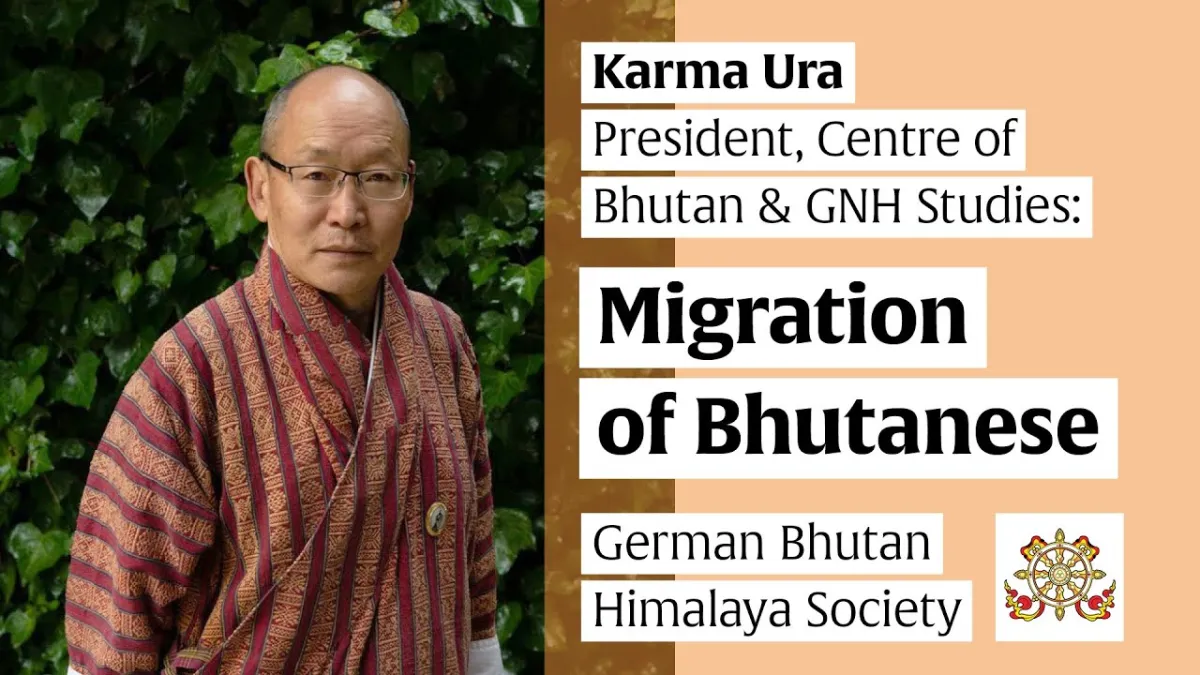 Photo: Dr. Karma Ura, via i.ytimg.com
This finding aligns with research from Harvard psychologist Daniel Gilbert and others, but Bhutan's dataset is unique because it tracks the same populations over decades, providing longitudinal evidence that income gains beyond basic security contribute virtually nothing to long-term happiness.
What Actually Matters
So if money doesn't buy happiness, what does? Bhutan's data points to four factors that consistently predict high wellbeing scores:
Community Connection: People with strong social networks—measured not by Facebook friends, but by regular face-to-face interaction with neighbors, family, and community members—score 40% higher on happiness metrics than socially isolated individuals.
Work-Life Balance: Citizens who work more than 50 hours per week show significantly lower wellbeing scores, regardless of income level. The sweet spot appears to be 35-40 hours of meaningful work, leaving ample time for relationships, rest, and personal interests.
Cultural Continuity: People who maintain connection to traditional practices, languages, and customs report higher life satisfaction than those who've fully adopted Western lifestyles. This suggests that cultural rootedness provides psychological anchoring that material progress can't replace.
Environmental Quality: Access to clean air, water, and natural spaces correlates strongly with mental health outcomes. Bhutanese living in areas with high biodiversity and minimal pollution score consistently higher on psychological wellbeing measures.
The Sleep Discovery
Perhaps most surprisingly, Bhutan's research revealed that sleep quality is the single strongest predictor of next-day happiness scores—stronger than income, job satisfaction, or even relationship status.
"We discovered that people who sleep well are happy, and people who don't sleep well are miserable, regardless of everything else in their lives," notes Dr. Ura. "Yet Western countries barely track sleep in their wellbeing studies."
Bhutanese adults average 8.2 hours of sleep per night, compared to 6.8 hours for Americans. This isn't because they're lazy—it's because their culture prioritizes rest as essential for human functioning, rather than viewing sleep as time stolen from productivity.
The Technology Trap
Bhutan's data also reveals troubling trends about technology adoption. As smartphones and internet access spread throughout the kingdom, happiness scores among young people have declined markedly—even as their economic opportunities have expanded.
The research suggests that digital connectivity, while providing access to information and global markets, disrupts the face-to-face social bonds that historically provided psychological security. Young Bhutanese spending more than three hours daily on screens report significantly higher anxiety and lower life satisfaction than their less-connected peers.
What America Could Learn
Bhutan's findings offer a roadmap for rethinking American priorities, but implementing their insights would require fundamental shifts in how we organize society.
Consider urban planning: Bhutanese communities are designed around walking distances and central gathering spaces that encourage spontaneous social interaction. American suburbs, optimized for car travel and privacy, actively discourage the community connections that Bhutan's data shows are essential for happiness.
Or work culture: while Americans glorify the 60-hour work week as a badge of honor, Bhutan's research suggests this approach systematically undermines the very life satisfaction that career success is supposed to provide.
The Measurement Problem
Perhaps most fundamentally, Bhutan's approach highlights how America's obsession with GDP growth might be actively counterproductive. If we only measure what we value, and we only value what we measure, then focusing exclusively on economic indicators creates a feedback loop that ignores human flourishing.
"You can't manage what you don't measure," argues Dr. Carol Graham, a Brookings Institution researcher who studies Bhutan's model. "By tracking only economic metrics, we've created policies that optimize for the wrong outcomes."
Several U.S. cities have begun experimenting with happiness indices modeled on Bhutan's approach, but these efforts remain marginal compared to the resources devoted to tracking economic indicators.
The Bhutanese Challenge
Bhutan isn't perfect—they face challenges with youth unemployment, rural development, and balancing tradition with modernity. But their five decades of happiness research offer something invaluable: proof that alternative models of progress are possible.
Their data suggests that many assumptions driving American life—that more money means more happiness, that longer work hours lead to better outcomes, that technological connectivity improves wellbeing—are simply wrong.
The question isn't whether America could adopt Bhutan's exact model. It's whether we're brave enough to question our own.
 Photo: Harvard University, via images3.alphacoders.com