Traditional Hawaiian Fishermen Could See Underwater Without Goggles. Science Finally Figured Out How.
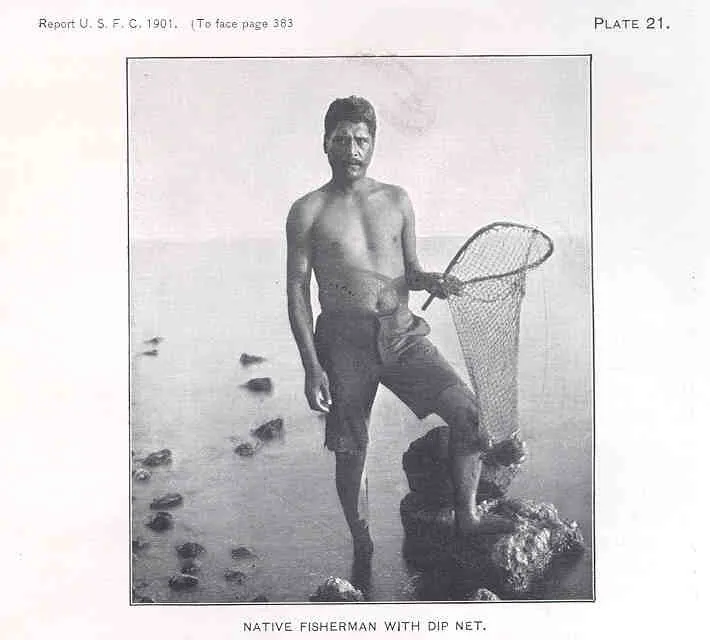
Photo: John Nathan Cobb, Public domain, via Wikimedia Commons
The Thing Tourists Never Notice
If you've ever snorkeled off the coast of Hawaii, you know what the ocean looks like through a mask: sharp, vivid, almost impossibly clear. Without one, everything beneath the surface becomes a blur — physics, specifically the difference in refractive index between air and water, guarantees it.
Human eyes are built for air. The cornea, which does most of the focusing work, loses nearly all its refractive power the moment it contacts water. It's not a design flaw exactly — it's just that evolution didn't prioritize underwater vision for a species that breathes air.
Which is why what traditional Hawaiian fishermen were reportedly doing for centuries is so strange. And so worth paying attention to.
A Skill Passed Down Through Generations
Among the traditional fishing communities of Hawaii, particularly those practicing free-diving techniques that predate Western contact, there existed a cultivated ability to see with unusual clarity underwater — without any optical aid. This wasn't a matter of tolerating blur and guessing at shapes. Accounts from cultural historians, anthropologists studying Pacific Islander maritime traditions, and the oral histories of native Hawaiian fishing families describe something more specific: a trained, voluntary adaptation that allowed divers to identify fish species, read reef topography, and track movement beneath the surface with a precision that observers found remarkable.
The technique involved more than simply opening one's eyes underwater. It was tied to a specific breathing preparation before the dive, a deliberate relaxation of the muscles around the eye, and what practitioners described as a kind of intentional "softening" of vision — releasing the normal focusing effort rather than intensifying it. Younger fishermen learned it through years of practice, guided by elders who could articulate the sensation but not, of course, the physiology behind it.
For a long time, Western researchers who encountered these accounts did what Western researchers often did with indigenous technical knowledge: they filed it under "cultural practice" and moved on.
The Moken Children Who Changed the Conversation
The story of Hawaiian underwater vision didn't get serious scientific traction on its own. The catalyst came from a different Pacific culture.
In 2003, a Swedish researcher named Anna Gislén published a study in Current Biology that stopped the vision science community cold. Gislén had been studying the Moken people — sea nomads of the Andaman Sea, off the coasts of Thailand and Myanmar — and specifically their children, who spent enormous amounts of time diving for food in shallow coastal waters.
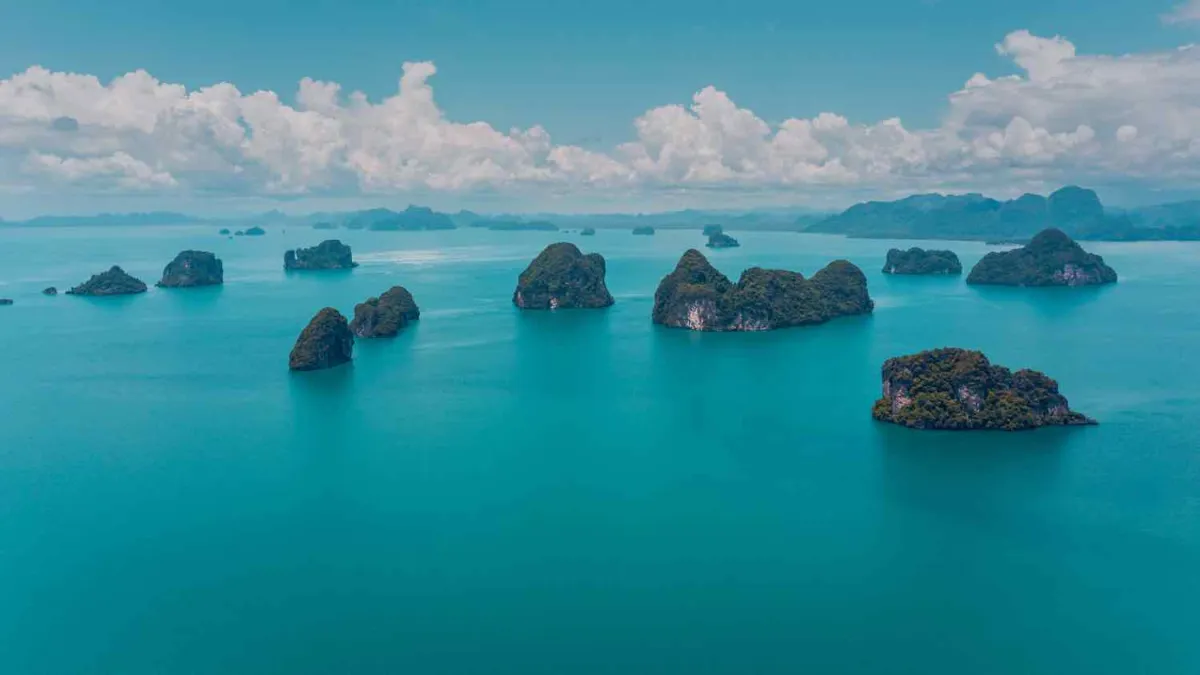 Photo: Andaman Sea, via www.geekyexplorer.com
What she found was that Moken children could see underwater with twice the acuity of European children tested under identical conditions. Their underwater vision was, by measurable standard, far better than what the physics of the human eye was supposed to allow.
The mechanism Gislén identified: the Moken children had learned to constrict their pupils to an unusually small diameter underwater and simultaneously adjust the curvature of their lenses — a feat that Western optometry had largely assumed was not under voluntary human control. The combination partially compensated for the cornea's lost refractive power in water.
Critically, Gislén also found that European children could learn to do the same thing with practice. The ability wasn't genetic. It was trained.
What This Means for the Hawaiian Accounts
Gislén's Moken research provided the scientific framework that makes the traditional Hawaiian fishermen's accounts suddenly legible.
The breathing preparation described in Hawaiian diving traditions — slow, deliberate respiratory patterns before submersion — is now understood to influence pupillary response. Controlled breathing affects the autonomic nervous system, which in turn regulates pupil dilation and constriction. The "softening" of vision that practitioners described may correspond to the voluntary lens accommodation adjustment Gislén documented in the Moken children: releasing the normal focusing tension of the ciliary muscles rather than contracting them.
In other words, what Hawaiian fishermen were teaching their children to do — through culturally transmitted practice, with no knowledge of the underlying anatomy — was almost certainly a real, trainable physiological adaptation. The folk instruction encoded a genuine technique. The mechanism just required 21st-century optometry equipment to see clearly.
The Broader Implication: Vision Is More Plastic Than We Thought
This is where the story expands beyond cultural history into something that vision researchers find genuinely unsettling in the best possible way.
Standard medical education teaches that human visual acuity is largely fixed after early childhood development. Refractive errors are corrected with lenses, not training. The eye is treated as hardware — stable, structural, not particularly responsive to behavioral modification.
The Moken research, and the broader body of work it inspired on indigenous diving cultures across the Pacific, suggests that model is incomplete. The human visual system retains more plasticity than the standard framework assumes. Pupil behavior, lens accommodation, and possibly other aspects of visual processing appear to be trainable through sustained, deliberate practice — particularly when that practice begins in childhood and is embedded in daily functional activity.
Researchers studying neuroplasticity have connected this to broader findings about how the brain allocates processing resources. When a skill is genuinely necessary for survival — finding fish on a reef, for instance — the brain reorganizes to support it in ways that feel almost implausible from the outside.
What's Been Lost and What Might Be Recovered
Modern Hawaiian fishing culture, like most traditional fishing cultures globally, has largely shifted to equipment-based methods. Goggles and masks are cheap, effective, and ubiquitous. The generational transmission of naked-eye underwater vision techniques has thinned considerably, though it hasn't disappeared entirely. Some traditional Hawaiian practitioners and cultural preservation programs still include elements of the old diving preparation in their teaching.
In optometry and vision therapy circles, interest in what's sometimes called "active vision training" has been growing steadily. Programs designed to improve dynamic visual acuity in athletes, pilots, and military personnel are already built on the premise that vision is trainable beyond the static correction model. The underwater vision research feeds directly into that conversation.
None of this means you'll be reading reef topography without a mask on your next Hawaiian vacation after a few YouTube tutorials. The adaptation takes years of consistent practice, ideally beginning young. But that's almost beside the point.
The point is that Hawaiian fishermen, and Moken sea nomads, and likely other Pacific Islander diving cultures developed a genuine visual capability that Western medicine spent a long time insisting wasn't possible. They didn't need the science. They just needed the ocean, the necessity, and the patience to teach their children carefully.
The science, as usual, arrived late — but at least it arrived.