Why Amish Children Almost Never Get Asthma — The Microbe Secret Modern Medicine Missed
The Numbers That Made Allergists Do a Double-Take
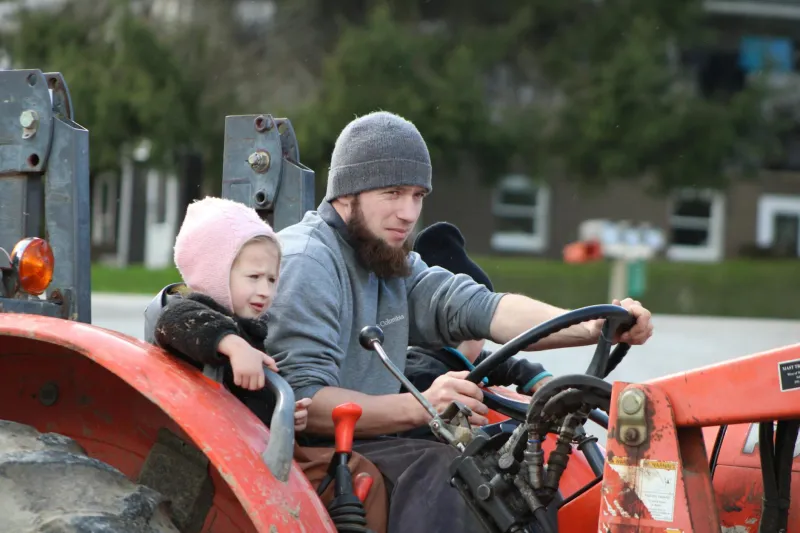
When researchers first started studying Amish communities in Ohio and Pennsylvania, they expected to find higher rates of respiratory problems. After all, these families live without air conditioning, work closely with livestock, and their children play in environments most suburban parents would consider unsanitary.
Instead, they discovered something that turned modern allergy medicine on its head: Amish children have asthma rates of just 2-4%, compared to 10-12% in the general American population. Even more striking, severe allergies are virtually nonexistent in these communities.
The Barn Dust Discovery
Dr. Mark Holbreich, an allergist from Indianapolis, stumbled onto this phenomenon while treating Amish patients in the early 2000s. "I kept waiting for the allergic kids to show up," he recalls. "They just never did."
What Holbreich and other researchers eventually discovered was revolutionary: Amish children who lived on farms with cattle had dramatically different immune systems than their non-Amish peers. Blood tests revealed higher levels of regulatory T cells — the immune system's peacekeepers that prevent overreactions to harmless substances.
The secret wasn't just farm life. It was barn dust.
The Microbe Training Ground
Modern research has revealed that Amish barns are teeming with a diverse ecosystem of bacteria, fungi, and other microorganisms. When children breathe this air from infancy, their developing immune systems learn to distinguish between genuine threats and harmless environmental particles.
This "hygiene hypothesis" suggests that our sterile modern environments actually handicap immune development. Without early exposure to diverse microbes, children's immune systems become hypersensitive, attacking everything from pollen to peanuts as if they were dangerous invaders.
Raw Milk and Real Immunity
Another piece of the puzzle involves unpasteurized dairy. While health authorities warn against raw milk consumption, Amish families have consumed it for generations without the allergic reactions that plague other communities.
Recent studies suggest that raw milk contains beneficial bacteria and proteins that help train the immune system. Pasteurization, while eliminating harmful pathogens, also destroys these protective compounds.
Researchers emphasize they're not advocating for raw milk consumption in modern settings — the Amish have controlled, small-scale dairy operations very different from industrial farms. But the findings highlight how our food processing methods might have unintended consequences.
The Birth Order Effect
Even within Amish families, scientists noticed patterns. First-born children had slightly higher allergy rates than their younger siblings, who benefited from exposure to the microbes their older siblings brought home.
This mirrors findings in non-Amish populations: children with older siblings consistently show lower allergy rates than only children. The theory? Older siblings act as "germ carriers," exposing babies to a wider range of microorganisms during critical developmental windows.
Modern Applications Without the Lifestyle
The Amish discovery has sparked new approaches to allergy prevention that don't require abandoning modern medicine. Some pediatricians now recommend:
- Delayed introduction of antibacterial products in homes with infants
- Earlier introduction of potential allergens like eggs and peanuts
- Exposure to pets and outdoor environments during early childhood
- Probiotic supplementation for pregnant mothers and infants
The Urban Farm Movement
Cities across America are experimenting with "microbe diversity" programs. Some daycare centers have introduced controlled exposure to farm animals. Others have replaced sterile play areas with natural environments featuring soil, plants, and beneficial bacteria.
These programs aim to replicate the immune training that happens naturally in Amish communities without requiring families to abandon modern conveniences.
What This Means for Your Family
The Amish example doesn't suggest we should reject modern hygiene entirely. But it does highlight the importance of balanced exposure during early childhood.
Simple changes — letting children play in dirt, spending time outdoors, avoiding overuse of antibacterial products — might help their immune systems develop the same robust tolerance that protects Amish children.
The irony is striking: in our quest to protect children from germs, we may have created the conditions for a different kind of health crisis. Sometimes the best medicine isn't cleanliness — it's learning to live peacefully with the microbial world that surrounds us.