The Loneliest Job in America Produced Some of Its Most Mentally Resilient Workers — Here's What They Knew
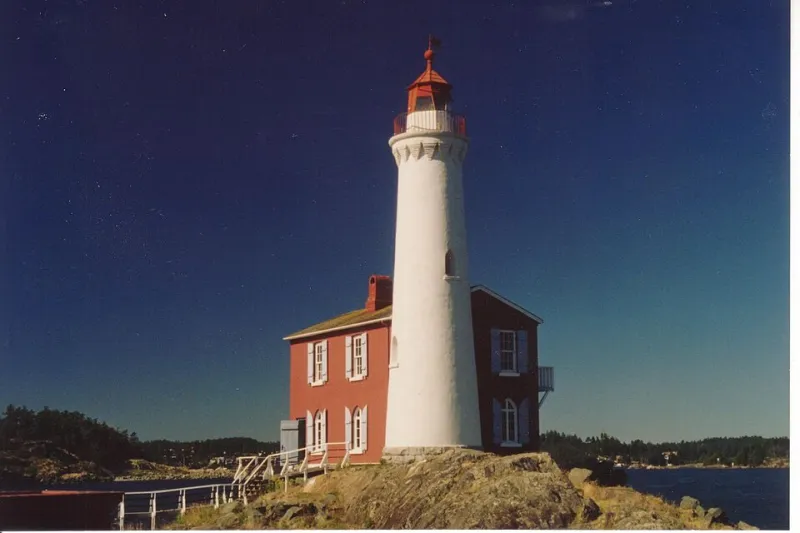
Photo: Bruce Tuten, CC BY 2.0, via Wikimedia Commons
The Job Nobody Envies
Imagine this: you live alone — or with one other person — on a rocky outcropping surrounded by water. The nearest town might be a day's boat ride away. Your job is to keep a light burning and a log updated. You do this for months at a stretch, sometimes through storms that shake the walls of your stone tower, sometimes through stretches of such complete silence that the sound of your own breathing becomes noticeable.
This was the life of an American lighthouse keeper in the 1800s. And by any modern measure, it sounds like a recipe for serious psychological damage.
Except — it mostly wasn't.
Historical records from the U.S. Lighthouse Board, keeper logbooks, and correspondence archives reveal something that researchers studying modern loneliness have found genuinely startling: lighthouse keepers, as a group, showed remarkably low rates of the mental deterioration and breakdown that plagued other isolated workers of the same era — sailors, frontier trappers, solo miners. Something was protecting them. And when researchers started reading the logbooks closely, they think they found what it was.
 Photo: U.S. Lighthouse Board, via www.siyachts.com
The Logbook as a Window Into Something Unexpected
Lighthouse keepers were required to maintain detailed daily logs — weather conditions, vessel sightings, equipment maintenance, supply levels. It was a bureaucratic requirement, nothing more. But these logs became something else entirely in the hands of keepers who had very little else to structure their days around.
Many keepers wrote far beyond what was required. They recorded the behavior of birds nesting on the rocks. They documented the precise timing of seasonal changes in light and tide. They noted small mechanical improvements they'd made to equipment, sketched diagrams, recorded personal observations about cloud formations. Some kept separate journals alongside the official logs — diaries that were essentially philosophical in nature, meditations on solitude and purpose written by people who had nothing but time and a burning light to tend.
What researchers noticed when reading these documents wasn't despair. It was engagement. These were people who had found an almost obsessive sense of purpose in the texture of their daily work — and who had, without any psychological training whatsoever, constructed daily routines that modern loneliness researchers now recognize as textbook protective behaviors.
The Three Things That Kept Them Whole
Structured purpose routines. Every keeper's day was organized around a set of non-negotiable tasks: trimming the wick, cleaning the lens, logging the weather, maintaining the fog signal equipment, checking fuel levels. These weren't optional. The rhythm of the day was externally imposed by the job itself, which meant that even on days when motivation was low — and surely there were many — the keeper had a clear sequence of actions that gave the hours shape and meaning.
Loneliness researchers now know that one of the most damaging aspects of social isolation isn't the absence of people — it's the collapse of structure that often accompanies it. When there's no one to coordinate with, no shared schedule to anchor the day, time loses its texture. Keepers didn't have this problem. The light had to be lit at dusk. The log had to be written. The lens had to be polished. The day had bones.
Micro-social connection. Keepers weren't completely without human contact — they just had very little of it, and what they had was highly intentional. Supply boats arrived periodically. Vessels passing in the night sometimes signaled. Correspondence with the Lighthouse Board was regular. Keepers in multi-person stations developed extraordinarily close, carefully maintained relationships with their one or two companions.
What's notable is how much weight keepers placed on these small interactions. Letters were answered promptly and at length. Signal exchanges with passing ships were recorded with obvious satisfaction. The arrival of a supply tender was treated as a significant social event. Modern loneliness research has a term for this: micro-dosing connection — the idea that small, intentional, meaningful social interactions can provide substantial psychological protection even in the absence of rich social networks.
Mastery and craft identity. Lighthouse keepers were deeply proud of their technical skill. Maintaining a Fresnel lens — the complex, multi-tiered optical system at the heart of most 19th-century lighthouses — required genuine expertise. Keepers who achieved unusually clean lenses, who kept their lights burning through severe storms when others failed, who identified and solved mechanical problems without outside help, wrote about these accomplishments with evident pride.
 Photo: Fresnel lens, via cdn.hswstatic.com
This sense of craft identity — I am someone who does this well — turns out to be one of the most powerful buffers against the psychological corrosion of isolation. When a person has a clear, valued skill that requires ongoing attention and improvement, it provides a continuous source of meaning that doesn't depend on other people to validate it.
What This Has to Do With 2024
America is in what public health officials have officially called a loneliness epidemic. Surgeon General advisories, major research institutions, and a growing body of clinical literature all point to the same conclusion: chronic loneliness is now one of the leading risk factors for early death, on par with smoking.
The proposed solutions tend to involve technology — apps designed to facilitate connection, social media platforms theoretically linking isolated people, telehealth services for mental health support. And yet the research keeps showing that what actually protects people from loneliness isn't the quantity of social contact but its quality, combined with a few other factors that have nothing to do with other people at all.
Structured daily purpose. Small but meaningful connection. A craft or skill that demands your ongoing attention and rewards your improving mastery.
Lighthouse keepers had all three — accidentally, by necessity, because the job required it. They weren't trying to build a mental health protocol. They were just trying to keep the light on.
The Overlooked Lesson in the Logbooks
There's something almost poignant about reading a 19th-century lighthouse keeper's log and recognizing, in the careful daily entries about lens polish and bird behavior and the precise color of a winter sunset, a person who had quietly solved a problem that modern society is only beginning to take seriously.
They didn't have wellness apps. They didn't have therapists or loneliness coaches or community connection platforms. They had a stone tower, a burning light, a required log, and the discipline to fill each day with purposeful attention.
It was enough. More than enough, apparently.
The logbooks are still out there in archives across the country — in lighthouse museums, historical societies, and the National Archives. They're worth reading. Not just as history, but as a quiet instruction manual for surviving isolation with your mind intact.
 Photo: National Archives, via c8.alamy.com