Fall Asleep in 120 Seconds: The Military Relaxation Method That Got Buried for Decades
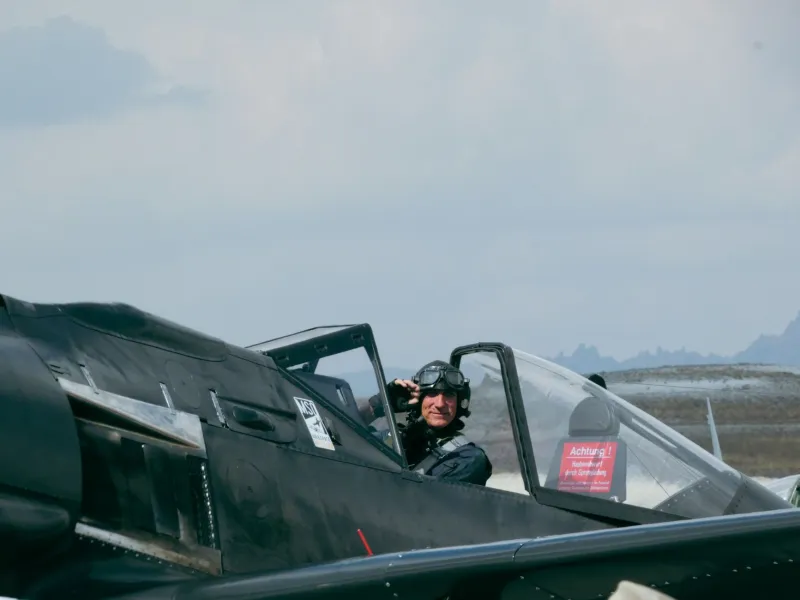
It sounds like the kind of thing that shows up in a late-night scroll session: a technique, supposedly developed for WWII fighter pilots, that lets exhausted people fall asleep in about two minutes — anywhere, under almost any conditions.
The story sounds too neat. But unlike most internet sleep hacks, this one has a paper trail, a physiology, and a reason it fell off the radar. And for the roughly one in three American adults who don't get enough sleep, it might be the most practical forgotten document of the 20th century.
Where the Method Came From
The technique traces back to the wartime U.S. Navy, where flight instructors faced a grim problem: sleep-deprived pilots were making fatal errors, including friendly-fire mistakes attributed to exhaustion. Pilots needed to grab rest whenever possible — in cramped quarters, amid noise, under stress.
The method was later laid out in detail by coach Lloyd Bud Winter in his 1981 book Relax and Win: Championship Performance. Winter, a legendary track coach, claimed the technique, once practiced for about six weeks, let around 90% of pilots fall asleep within two minutes, even sitting up, even with coffee in their systems.
Then the book went out of print, the war faded, and the method survived mainly in the margins of sports psychology — until the internet dug it back up.
The Method, Step by Step
The technique is a progressive relaxation of the body followed by a deliberate quieting of the mind:
- Relax your entire face. Forehead, jaw, the muscles around your eyes, even your tongue. Most people carry tension here without knowing it.
- Drop your shoulders. Let them fall as low as they'll go, then relax one arm — upper arm, forearm, hand — then the other. If it won't release, tense briefly, then let go.
- Exhale and relax the chest, then work down through the legs: thighs, calves, feet.
- Clear your mind for ten seconds. This is the hard part. Winter suggested picturing a calm scene — lying in a canoe on a still lake, or lying in a black velvet hammock in a pitch-dark room. If images won't stick, silently repeat the word "think" or "don't think" for ten seconds.
That's it. No supplements, no gadgets, no subscription.
Why It Actually Works
Skeptics are right to be suspicious of the "two minutes" framing — but the underlying mechanism is well-supported physiology.
The technique is essentially a manual activation of the parasympathetic nervous system, the body's rest-and-digest mode. Progressive muscle relaxation — systematically tensing and releasing, or deliberately releasing — reliably lowers heart rate, blood pressure, and circulating stress hormones. It's been studied for decades and remains a standard component of clinical insomnia treatment, particularly cognitive behavioral therapy for insomnia (CBT-I), the first-line treatment recommended by the American Academy of Sleep Medicine.
The visualization piece has a logic too. Racing thoughts are often the real culprit behind sleeplessness, and giving the mind a single, bland, non-stimulating image crowds out the rumination loop. You can't catastrophize about tomorrow's meeting and picture a canoe at the same time.
What the military version adds is repetition as a training principle. Winter's claim wasn't that it works on night one — it's that, like any skill, the relaxation response gets faster with practice. Two minutes was the trained result, not the starting line.
A Good Night's Worth Trying
A few honest caveats: this isn't a cure for clinical insomnia, sleep apnea, or chronic anxiety, and anyone dealing with those should talk to a doctor. The "90% success rate" figure comes from coaching lore, not a controlled trial.
But the core move — systematic relaxation plus a quieted mind — is one of the few sleep interventions with both a long clinical track record and zero cost. And there's something fitting about where it came from. The people who refined it weren't chasing wellness. They were young, terrified, and desperately tired, and they needed their bodies to cooperate.
Tonight, before you reach for the melatonin, try the canoe. Six weeks of practice, the old instructors said, and your body might just learn to flip its own off switch.