A Nomadic Culture in Central Asia Has Almost No Word for Migraine — Movement Scientists Are Starting to Understand Why
The Medical Survey That Produced a Strange Blank Space
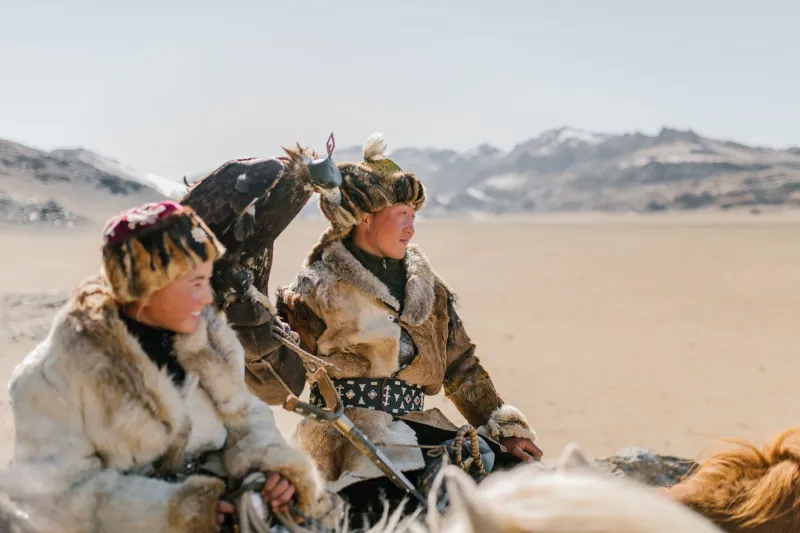
When a team of international health researchers conducted a comprehensive survey of chronic pain conditions among traditional nomadic herding communities in the Mongolian steppe in the early 2010s, they expected to find the usual distribution of ailments — joint problems from riding, respiratory issues from dust and cold, the kinds of chronic conditions that show up in physically demanding outdoor lives.
What they didn't expect was a near-total absence of migraine and chronic tension headache.
In communities where people had limited access to modern healthcare and therefore little incentive to underreport pain conditions, the incidence of migraine — a condition that affects roughly 12% of the US population and costs American employers an estimated $36 billion annually in lost productivity — was so low it barely constituted a data category. Tension headaches, which affect an even higher percentage of Western adults, were similarly sparse.
The researchers went looking for explanations. What they found is quietly reshaping how movement scientists think about chronic pain.
It's Not the Diet (Mostly)
The first instinct, naturally, was to look at food. Mongolian herding communities have a distinctive diet — heavy in fermented dairy, meat, and minimal processed food — and it's reasonable to wonder whether dietary factors explain the headache gap.
They probably explain some of it. Processed food elimination removes a meaningful category of migraine triggers. But when researchers controlled for dietary variables and compared the herding communities to other rural Mongolian populations with similar diets but more sedentary, settled lifestyles, the headache disparity persisted. Diet alone wasn't the answer.
The divergence tracked with movement patterns. Specifically, with the particular way that nomadic herding life requires people to move — and, crucially, how it requires them to not move in the ways that desk-bound modern life demands.
The Cervical Connection
Here's the physiological thread that makes this story click into place. A significant proportion of tension headaches and a meaningful subset of migraines have a cervicogenic component — meaning they originate from, or are substantially worsened by, dysfunction in the cervical spine and the muscles of the neck and upper back. The suboccipital muscles (the small, deep muscles at the base of the skull) are particularly implicated. When they're chronically shortened, compressed, or in sustained low-grade contraction, they can generate referred pain that presents as headache.
For most American adults, the posture of modern life is a slow-motion disaster for these structures. Hours of forward head posture — looking at screens, hunching over keyboards, driving — progressively shortens the anterior neck musculature and loads the posterior cervical chain in ways the human spine was not designed to sustain for eight or ten hours daily.
Nomadic herders on the Mongolian steppe spend their days doing something structurally opposite. Riding involves a dynamic, three-dimensional spinal engagement that constantly varies the load on cervical structures rather than fixing them in a single compressed position. Walking over uneven terrain — which herders do for miles daily — activates a cross-body gait pattern that rhythmically mobilizes the thoracic spine and keeps the cervical region moving through its natural range. Even the act of scanning the horizon repeatedly — watching for weather, tracking animals, navigating — produces a consistent pattern of cervical rotation and extension that modern desk workers almost never perform.
The neck, in other words, never gets stuck.
The Horizon Habit
That last point — the horizon scanning — has gotten particular attention from researchers, and it's one of the more immediately practical findings to come out of this work.
Human vision evolved for a world where we regularly looked at things far away. The visual-cervical reflex that governs how the eyes and head coordinate during distance scanning involves a specific pattern of muscle activation that keeps the deep cervical stabilizers engaged without compressing the suboccipital region. It's a kind of natural decompression movement that the eye-to-screen distance of modern work almost completely eliminates from daily life.
Herders look at the horizon dozens of times an hour. The average American office worker may go an entire workday without ever focusing on something more than fifteen feet away.
Some physical therapists working in chronic headache treatment have been quietly incorporating "distance gaze" protocols into their programs — structured periods of looking at far objects combined with gentle cervical rotation — based partly on this kind of observational research. It's low-tech, it's free, and early clinical reports suggest it's more effective than it has any right to sound.
What the Mornings Look Like
Another pattern that emerged from the research involves morning movement. Traditional herding life begins with immediate, varied physical activity — animals need tending from the first light, which means the body transitions from sleep to full-range movement within minutes of waking, without an intervening period of sitting.
Contemporary pain science has been increasingly interested in the "morning stiffness window" — the period after sleep when inflammatory markers are elevated and the musculoskeletal system is most vulnerable to the postural loading patterns that follow. For most Americans, that window is filled with more sitting: breakfast, the commute, the first hours at a desk. For Mongolian herders, it's filled with movement that disperses morning inflammatory accumulation before it has a chance to set into the pain patterns of the day.
Practical Takeaways for People Who Can't Herd Goats
Nobody's suggesting you relocate to the steppe. But the research points toward a few specific, actionable habits that cost nothing and take almost no time:
- Every 30 minutes, look at something at least 50 feet away for 20–30 seconds while gently rotating your head side to side. This resets the visual-cervical reflex and interrupts suboccipital compression buildup.
- Move within 10 minutes of waking — even a five-minute walk before sitting down changes the morning inflammatory window meaningfully.
- Vary your spinal position throughout the day rather than optimizing for a single "correct" posture. The herders' bodies stayed healthy not because they had perfect posture, but because they never held any posture long enough for it to become a problem.
The Mongolian herders didn't set out to solve chronic pain. They were just living in a way that kept them moving, kept their necks free, and kept the horizon in sight. The absence of migraines was just what happened when a body got to do what it was built for.
Turns out, that's harder to achieve than it sounds — and more important than most of us ever realized.