The Taxi Drivers Whose Brains Physically Grew — And the Lost Art of Navigating Without a Phone
There's a moment familiar to almost every American driver: the app dies, the signal drops, and you realize with a small lurch of panic that you have no idea where you are.
For most of human history, that feeling didn't exist. People knew where they were the way they knew their own names. And a small group of professionals kept that skill alive long enough for scientists to catch it in the act — and discover something remarkable hiding inside their skulls.
The Study That Made Neuroscientists Sit Up
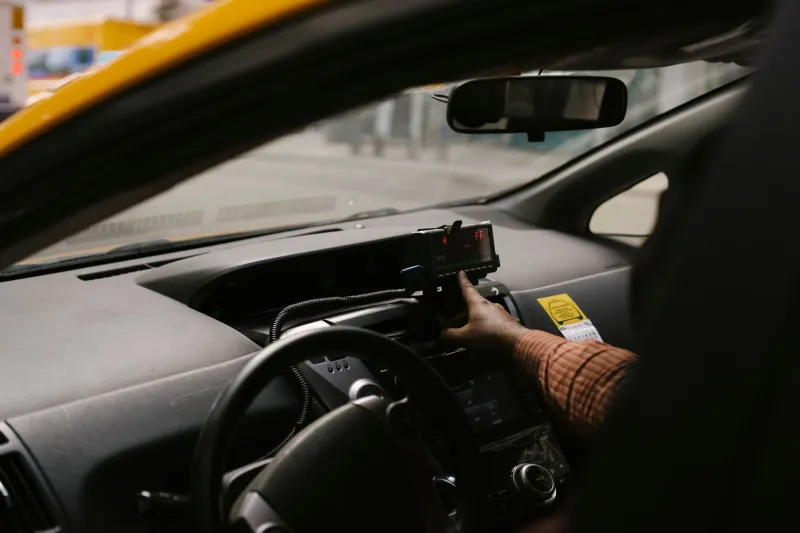
In 2000, researchers at University College London published a finding that's still echoed in psychology classrooms today. They scanned the brains of London taxi drivers — men and women who had spent years mastering "the Knowledge," a licensing exam requiring them to memorize roughly 25,000 streets and thousands of landmarks.
The rear portion of the drivers' hippocampi — the brain region central to spatial memory — was measurably larger than in control subjects. Even stranger, the longer someone had been driving, the bigger the difference. The human brain, it turned out, was still behaving like a muscle. Navigate intensely for years, and the equipment physically adapts.
But here's the part most people missed: this wasn't a British quirk. A quieter body of work on American postal clerks and delivery workers in the early 20th century suggested the same thing. Clerks in sprawling cities like Chicago and New York, sorting thousands of addresses into routes they carried entirely in their heads, showed an uncanny fluency with urban geography — the kind of "city sense" that old-timers described as almost supernatural.
They weren't gifted. They were trained — by necessity.
What We Quietly Gave Up
GPS didn't just make navigation easier. It made it optional. And studies over the past decade suggest that when we outsource wayfinding, our own spatial machinery goes dormant. Research on drivers using navigation apps has found reduced hippocampal engagement compared to those navigating on their own.
Why does that matter? The hippocampus doesn't only handle maps. It's deeply involved in memory consolidation and is one of the first regions affected by Alzheimer's disease. Some researchers have floated an uncomfortable hypothesis: a lifetime of passive navigation may represent a kind of cognitive disuse, the brain equivalent of a sedentary lifestyle.
No one is saying your maps app will give you dementia. But the directional evidence — that deliberate spatial memory is trainable, beneficial, and vanishing — is hard to ignore.
The Technique Nobody Teaches Anymore
The old clerks and cabbies weren't doing anything mystical. They were practicing what cognitive scientists call deliberate spatial encoding, and you can borrow it in small doses:
- Drive one route without the app. Pick a trip you take weekly. Study the route once, then do it from memory. Notice how your attention changes when your brain is actually working.
- Sketch your neighborhood from above. Grab a pen and draw your area — streets, parks, the coffee shop on the corner. The gaps you hit reveal how little of your own world you've actually mapped.
- Learn cardinal directions. Old delivery men always knew which way was north. It's a habit, not a talent: check the sun, note it once, repeat it daily.
- Take a new walking route home. Novelty forces the hippocampus to build fresh representations. Familiar routes on autopilot do nothing.
- Describe your route out loud. Verbal encoding — "left at the pharmacy, past the water tower" — layers memory the way the old-timers did.
An Old Skill With New Stakes
There's something a little poetic here. The professionals who kept human navigation alive — the cabbies, the clerks, the mail carriers — did it not for self-improvement but because the job demanded it. The skill was a byproduct of work that required a person to hold a city in their head.
We've since built machines to do that holding for us. That's not a bad thing. But the UCL study left us with a genuinely useful discovery: the capacity is still there, waiting, and it responds to use like anything else in the body.
You don't need to memorize 25,000 streets. You just need to stop letting an algorithm be the only one who knows where you are. Start with tomorrow's commute. Your hippocampus will notice — and science suggests it might even say thank you.