The Mountain Healers Who Talked People Through Trauma 200 Years Before Modern Therapy
The Forgotten Healers of Appalachia
Before Sigmund Freud ever sat behind his famous couch, before Carl Jung coined the term "collective unconscious," and decades before cognitive behavioral therapy became the gold standard for mental health treatment, a network of mountain women was quietly revolutionizing how humans process emotional pain.
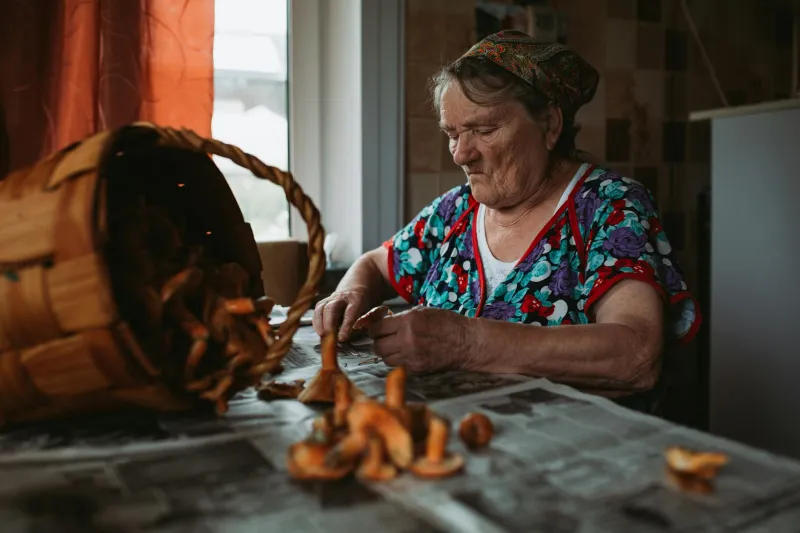
They called them "granny women"—though many weren't grandmothers at all. These Appalachian healers, scattered across remote Kentucky, Tennessee, and West Virginia communities, developed an intricate system of mental health care that modern researchers are just beginning to understand.
What makes their story remarkable isn't just that they preceded formal psychology by generations. It's that they independently discovered therapeutic techniques that wouldn't be "officially" developed until the 20th century.
The Mountain Method
Dr. Sarah Mitchell, a folklore researcher at East Tennessee State University, has spent fifteen years documenting the practices these women used. What she found challenges everything we think we know about the origins of talk therapy.
"They had a structured approach that's almost identical to what we now call narrative therapy," Mitchell explains. "Women would come to these healers with what locals called 'the nerves'—what we'd diagnose today as anxiety disorders, depression, or trauma responses."
The granny women's treatment began with something they called "the telling." Patients would recount their troubles while the healer listened without interruption—a practice that mirrors modern active listening techniques. But here's where it gets interesting: these mountain healers intuitively understood that how you tell your story shapes how you heal from it.
Rewriting Pain Into Power
"They'd have women tell the same story multiple times," Mitchell notes, "but each time, they'd guide them to notice different details, different perspectives. By the third or fourth telling, the story would change—and so would how the woman felt about what happened to her."
This technique, now called "narrative restructuring" in clinical psychology, helps patients reframe traumatic experiences in ways that restore their sense of agency and control. The granny women discovered this naturally, through generations of trial and error.
But they didn't stop there. These healers also pioneered what modern therapists call "bibliotherapy"—using stories and metaphors to help people process difficult emotions. They'd share carefully chosen folktales, Bible stories, or local legends that paralleled their patient's struggles, allowing them to explore their feelings through the safety of narrative distance.
The Community Cure
Perhaps most remarkably, these mountain healers understood something that mainstream psychology is only recently embracing: healing happens in community, not isolation.
"They'd often bring other women into the healing process," explains Dr. James Appleton, a psychiatrist studying traditional healing methods. "Not as an audience, but as witnesses and supporters. They created what we'd now recognize as peer support networks."
These impromptu therapy circles served multiple purposes. They normalized mental health struggles by showing that others had survived similar challenges. They provided ongoing emotional support beyond the formal healing sessions. And they created accountability systems that helped ensure people continued practicing the coping strategies they'd learned.
The Science Behind the Stories
Modern neuroscience is beginning to explain why these intuitive methods worked so well. When we repeatedly tell a traumatic story in a safe environment, our brains literally rewire the neural pathways associated with that memory. The emotional charge diminishes, and we regain cognitive control over our response.
The granny women somehow understood this without knowing anything about neurons or brain chemistry. They just knew that talking through pain, in the right way, with the right support, could transform it.
Lost Knowledge, Found Again
So why did this sophisticated system of mental health care disappear? The answer reveals uncomfortable truths about how medical knowledge gets legitimized in America.
As formal medical education spread through Appalachia in the early 1900s, these women's practices were dismissed as "folk superstition." Trained doctors, almost exclusively male, couldn't see the sophisticated psychology embedded in what looked like simple storytelling and community gathering.
The granny women's knowledge was entirely oral—passed down through apprenticeship and practice, never written down in medical journals or textbooks. When the last generation of these healers died, their methods died with them.
What We're Missing Today
Today, as mental health crises surge across America and therapy waiting lists stretch for months, some researchers are asking whether we threw away something valuable when we dismissed these mountain healers.
"We've medicalized mental health to the point where we've lost sight of some basic truths," argues Dr. Appleton. "Healing happens through human connection, through story, through community. These mountain women knew that instinctively."
The granny women's approach offers lessons that go beyond specific therapeutic techniques. They understood that mental health care should be accessible, community-based, and rooted in the cultural context of the people being served.
Their story reminds us that wisdom doesn't always come from universities or medical schools. Sometimes, the most profound insights emerge from ordinary people responding to extraordinary need with nothing but intuition, compassion, and generations of accumulated human understanding.
In our rush toward pharmaceutical solutions and evidence-based protocols, we might have overlooked something these mountain healers knew all along: sometimes, the most powerful medicine is simply being heard, understood, and reminded that you're not alone in your struggle.